
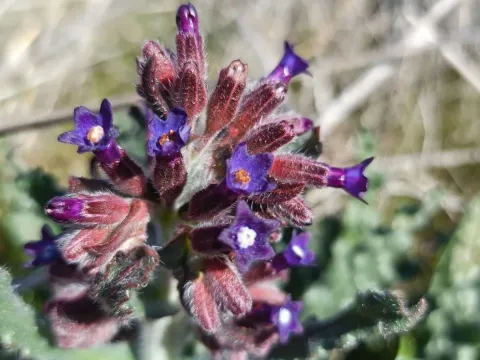
Anchusa undulata
Anchusa undulata
Anchusa undulata, belonging to the Boraginaceae family, is a perennial herbaceous plant native to the Mediterranean region. Sowing should ideally occur in early spring when the soil temperature consistently reaches 15 degrees Celsius.
What the section contains
Anchusa undulata
When starting seeds indoors, it is recommended to use biodegradable pots to minimize root disturbance, as the plant possesses a sensitive taproot system that does not tolerate transplanting well.
Seeds benefit from light stratification, which helps break dormancy and promotes more uniform germination. The recommended sowing depth is approximately 1 centimeter in well-aerated soil.
Once seedlings have developed two sets of true leaves, they can be hardened off for a week before being transplanted to their final location in the garden.
Ensure that the planting site is prepared with adequate spacing, keeping at least 45 centimeters between individual plants to prevent overcrowding and improve airflow.
The plant thrives in full sun, which is essential for stimulating flower production and maintaining the compact habit of the rosettes during the early vegetative stages.
Soil requirements focus primarily on drainage. Anchusa undulata is perfectly adapted to poor, rocky, or sandy soils, provided that water does not accumulate during the winter months.
While known for its drought tolerance once established, the plant appreciates supplemental irrigation during the peak flowering period to extend the duration of its bloom.
Nutrient requirements are relatively low. Excessive application of nitrogenous fertilizers can lead to weak, leggy stems that require staking to stay upright.
The plant is highly adaptable to various pH levels, performing well in both slightly acidic and slightly alkaline soil environments, making it a versatile choice for many gardens.
The main threat to the health of this species is fungal infection caused by high humidity and poor circulation. Powdery mildew is the most common issue in overly dense plantings.
Root rot is a significant danger if the soil is not well-draining. Symptoms include wilting and yellowing leaves, even when the soil surface appears dry to the touch.
Aphids can be problematic during the active growth stage, congregating on the stems and flower buds, which can stunt development and spread pathogens.
Regular monitoring of the foliage for signs of discoloration or insect activity allows for early intervention before the health of the plant is severely compromised.
- Ensuring proper spacing to reduce humidity around the base.
- Removing infected foliage immediately to prevent the spread of fungal spores.
- Using organic pest controls during the early stages of infestation.