
Anchusa stylosa
Anchusa stylosa
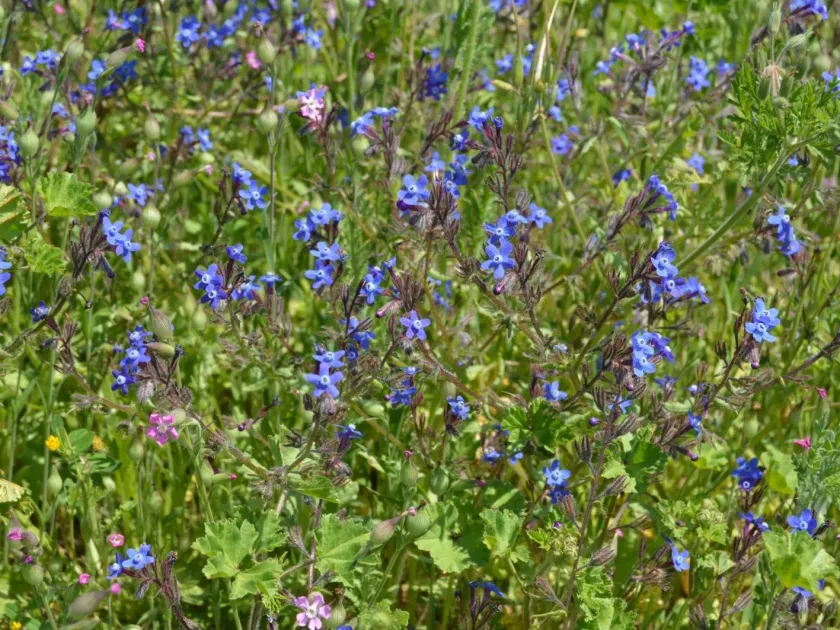
Description
Sowing dates
Anchusa stylosa is an herbaceous plant belonging to the Boraginaceae family. It is typically grown as an annual or biennial crop depending on the climate conditions and specific regional cultivation practices.
Sowing in open ground should occur in early spring once the soil temperature consistently reaches about 10 degrees Celsius. This timing allows for adequate root development before the arrival of intense summer heat.
Seeds are sown at a depth of approximately 1 to 2 centimeters. Ensuring proper soil-to-seed contact is crucial for achieving high germination rates and uniform seedling emergence across the field.
For regions with shorter growing seasons, starting plants in trays during late winter allows for earlier establishment. Transplanting should be done carefully to avoid damaging the taproot system.
Spacing is a vital aspect of the cultivation process. Plants should be placed 30 to 40 centimeters apart to provide sufficient air circulation and reduce the competition for soil nutrients.
Growing requirements
This species thrives in well-drained soils, ideally loamy or sandy loam textures with a neutral to slightly alkaline reaction. High drainage capacity is essential to prevent waterlogged conditions.
Anchusa stylosa is characterized by its high drought tolerance once established. The plant's deep taproot allows it to access subsoil moisture, making it resilient in arid or semi-arid environments.
Exposure to full sunlight is required for optimal growth and flowering. Any significant shade leads to elongated stems, poor vigor, and a drastic reduction in nectar production for pollinators.
The plant demonstrates good adaptability to temperature fluctuations typical of continental climates. It generally survives moderate spring frost periods without sustaining permanent damage.
Maintenance requirements are relatively low, focusing primarily on weed control during the seedling stage, after which the plant becomes competitive enough to occupy the niche efficiently.
Yield
The primary agricultural and economic value of Anchusa stylosa lies in its role as a high-quality honey plant. It is highly attractive to bees and other pollinators during the blooming season.
The nectar production is contingent on soil quality and moisture levels during the peak of flowering. In managed plots, it contributes significantly to the overall honey yield in early summer.
Aside from its apicultural value, the plant is sometimes utilized for land restoration due to its ability to grow in poor soils and its role in soil stabilization against erosion.
The biomass produced can be incorporated into the soil as green manure. Its deep root system facilitates the cycling of minerals from lower soil horizons to the surface layers.
Seed production is consistent when pollination is supported by local insect populations. Careful harvesting of seeds is necessary to prevent premature dispersal at maturity.
Main diseases and pests
Fungal pathogens such as powdery mildew are the most significant threats to the foliage of Anchusa stylosa, particularly in environments with high humidity and poor air ventilation.
Root rot is a major physiological and pathological risk, often caused by stagnant water or excessively heavy soils. Maintaining proper drainage is the primary defense strategy.
Slugs and snails pose a serious threat to young seedlings. In wet spring conditions, these pests can cause extensive damage to the emerging leaf tissue, impacting final plant density.
Leaf-eating insects, including various types of caterpillars, can reduce the overall photosynthetic capacity of the plant, indirectly affecting the duration and intensity of flowering.
Effective management includes regular scouting of the field to identify pest outbreaks early and applying integrated pest management strategies to protect the crop and local pollinators.