
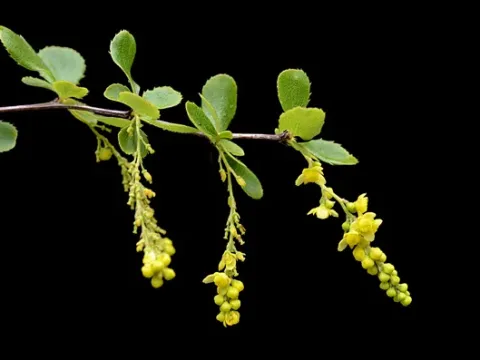
Henry barberry
Berberis henryana
Henry barberry (Berberis henryana) is a hardy deciduous shrub belonging to the Berberidaceae family. It is highly valued in horticulture for its elegant growth habit, resilient nature, and attractive seasonal foliage changes.
What the section contains
Henry barberry
The species originates from the mountainous regions of China. Due to its natural habitat, it has developed a high tolerance for rocky soils and varying environmental conditions, making it a reliable choice for temperate garden zones.
Botanically, it features thorny stems typical of the genus, which provide structural density. The small, ovate leaves are characteristic of the species, and the plant produces clusters of delicate, bright yellow flowers followed by small, non-edible berries.
Regarding cultivation requirements, this plant prefers well-drained, slightly acidic to neutral soil. While it can thrive in full sun, it also performs well in partial shade. Proper drainage is the most critical factor to prevent root rot in heavier soil types.
Agricultural management is relatively simple, focusing on annual pruning to maintain shape and encourage dense branching. Minimal fertilization is needed, typically applied in the early spring, and the plant is drought-tolerant once it has fully established itself.
The plant is occasionally susceptible to powdery mildew and rust, especially in regions with prolonged humid conditions. These fungal issues can be mitigated by ensuring proper spacing between plants and maximizing airflow throughout the canopy.
Common pests include aphids and barberry moth larvae. These pests feed on the tender new growth and can significantly weaken the plant if infestations remain unchecked. Regular monitoring of the foliage is essential for early detection.
Fungicides can be used as a preventative or curative measure for fungal outbreaks. It is recommended to apply treatments early in the spring, just as the buds begin to break, to protect the new foliage from early-season spores.
For insect control, horticultural oils or systemic insecticides are generally effective. It is vital to avoid broad-spectrum pesticides that may harm beneficial pollinators, such as bees, which frequently visit the shrub during its flowering period.
- Maintain good sanitation by clearing debris.
- Use systemic insecticides for localized outbreaks.
- Prune diseased wood immediately.
- Ensure proper air circulation to deter fungi.
- Water at the base to keep foliage dry.