
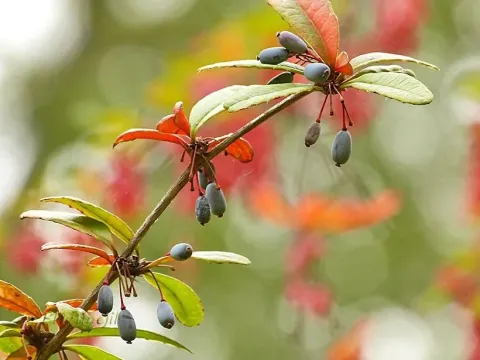
Henan barberry
Berberis honanensis
Henan barberry (Berberis honanensis) is a deciduous shrub species belonging to the Berberidaceae family, native to the central provinces of China. It is highly valued in horticulture for its elegant growth habit and vibrant aesthetic features throughout the changing seasons.
What the section contains
Henan barberry
The plant thrives in locations with full sun to partial shade, which is crucial for maintaining the specific foliage coloration characteristic of this species. It is relatively adaptable to various soil types, provided that the drainage is efficient and the soil structure is not prone to waterlogging.
For optimal growth, it is recommended to provide a balanced fertilizing regime in early spring to encourage vigorous shoot development. As a hardy plant, it establishes itself well once the root system is fully developed, becoming increasingly drought-tolerant over time.
Pruning is essential for maintaining the desired shape and promoting dense foliage. It is best performed in late winter or early spring before the buds begin to swell, which allows the gardener to remove any winter-damaged wood and refine the structure of the shrub.
In terms of landscaping, it is effectively used as an ornamental specimen, a foundation planting, or as part of a thorny defensive hedge. Its versatility makes it a popular choice for both public parks and private residential garden designs in temperate climate zones.
The primary pathogenic threats to Henan barberry include powdery mildew and rust diseases, which typically occur in environments with poor air circulation and high relative humidity during the warmer months of the year.
Cultural control methods, such as thinning the interior branches to improve airflow, are the most effective ways to prevent the onset of fungal infections without the excessive reliance on chemical fungicides.
Insect pests such as the barberry aphid and various lepidopteran larvae can cause significant damage to young leaves and growing tips, potentially leading to stunted plant development if left untreated.
Monitoring the plant for signs of infestation is recommended during the peak of spring. Using targeted horticultural oils or insecticidal soaps can often resolve minor pest issues while minimizing the impact on beneficial garden insects.
Overall, maintaining healthy soil conditions and providing adequate spacing between plants significantly boosts the innate resistance of Berberis honanensis to common local diseases and pests.