
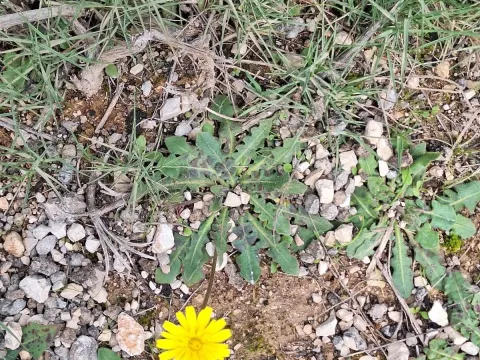
Leontodon
Leontodon
Leontodon, commonly known as hawkbit, belongs to the Asteraceae family and is a robust perennial herb often found in meadows and pastures. Sowing is typically carried out in early spring when soil temperatures reach stable levels, ensuring rapid germination and root establishment.
What the section contains
 Caucasian dandelion
Leontodon caucasicus
Caucasian dandelion
Leontodon caucasicus
 Hairy hawkbit
Leontodon hirtus
Hairy hawkbit
Leontodon hirtus
 Hoary hawkbit
Leontodon incanus
Hoary hawkbit
Leontodon incanus
 Leontodon biscutellifolius
Leontodon biscutellifolius
Leontodon biscutellifolius
 Leontodon bourgaeanus
Leontodon bourgaeanus
Leontodon bourgaeanus
 Leontodon crispus
Leontodon crispus
Leontodon crispus
 Leontodon filii
Leontodon laciniatus
Leontodon laciniatus
Leontodon filii
Leontodon filii
Leontodon laciniatus
Leontodon laciniatus
 Leontodon rigens
Leontodon tingitanus
Leontodon tingitanus
Leontodon rigens
Leontodon rigens
Leontodon tingitanus
Leontodon tingitanus
 Rock dandelion
Leontodon saxatilis
Rock dandelion
Leontodon saxatilis
 Rough hawkbit
Leontodon hispidus
Rough hawkbit
Leontodon hispidus
 Rough hawkbit
Leontodon asperrimus
Rough hawkbit
Leontodon asperrimus
 Tuberous dandelion
Leontodon tuberosus
Tuberous dandelion
Leontodon tuberosus
Leontodon
The seeds are small and require a fine, firm seedbed. Sowing depth should be shallow, generally between 10 and 15 millimeters, to protect the seeds from desiccation while allowing them to break the soil surface efficiently once they initiate the germination process.
Row spacing is usually set at approximately 15 to 20 centimeters. This arrangement facilitates light penetration and airflow, which are crucial for the development of the basal leaf rosettes that define the plant's growth habit during the initial vegetative phase.
In large-scale forage production, Leontodon is often included as part of a seed mix. Its ability to colonize gaps in the grassland ecosystem makes it an excellent choice for improving the biodiversity and nutritional value of long-term pasture lands.
Germination success is heavily dependent on surface soil moisture during the first few weeks after sowing. In drier climates, light irrigation may be necessary to ensure that the seedling population is sufficient for a productive stand throughout the growing season.
Leontodon is highly adaptable to a variety of temperate climates, showing significant resilience to cool temperatures and variable weather patterns. It thrives best in well-drained loamy soils that possess good moisture-retention capabilities without becoming waterlogged.
The plant prefers neutral to slightly acidic soil conditions. While it can survive in poorer soils, its biomass productivity increases substantially with moderate fertility, making it responsive to balanced fertilization practices in managed agricultural settings.
Sunlight exposure is a primary requirement for the plant's development. It should be grown in open, well-lit environments, as competition from taller vegetation can lead to stunted growth and a reduction in the quality of the forage provided to grazing animals.
Because of its natural habitat in grasslands, Leontodon is quite tolerant of grazing pressure and trampling. Its structural design, featuring a dense rosette of leaves close to the ground, allows it to recover quickly after being grazed by livestock.
Cultural management should focus on maintaining adequate soil nutrient levels, particularly phosphorus and potassium, to support vigorous growth. However, excessive nitrogen should be avoided as it may shift the plant's energy toward leaf elongation rather than root strength.
The primary threats to Leontodon in an agricultural context include foliar fungal diseases like powdery mildew, which can develop during periods of high humidity and poor ventilation. These diseases detract from the nutritional quality of the forage.
Soil-borne pests such as wireworms and various moth larvae can pose a risk by damaging the root systems or the base of the plant. Monitoring and timely mechanical cultivation are effective strategies for suppressing these pest populations below economic damage thresholds.
Management of the meadow ecosystem through systematic mowing is a vital tool for disease control. By removing mature foliage, the farmer disrupts the life cycle of many pathogens and prevents the buildup of fungal spores that would otherwise thrive on old plant tissues.
To prevent the spread of soil-borne pathogens, it is recommended to maintain good drainage and avoid overstocking pastures, which can cause excessive damage to the soil structure. A healthy plant, grown in optimal conditions, typically shows strong natural resistance.
In cases of severe infestation, biological controls are preferred to preserve the overall ecosystem health of the pasture. Strategic rotation and the use of resistant seed varieties represent the most sustainable approach to long-term weed and pest management.
Harvesting Leontodon for forage is best timed at the onset of flowering. This stage ensures a high concentration of proteins and essential minerals, providing superior nutritional value for livestock compared to later stages when the stems become more fibrous.
When mowing, maintaining a cutting height of 5 to 7 centimeters is essential. This protects the plant's central growing point, enabling it to regrow successfully and produce multiple harvests throughout the season if environmental conditions remain favorable.
Post-harvest handling requires effective wilting and drying of the cut material. Turning the swaths allows for even moisture loss, which is critical for preventing spoilage and ensuring that the harvested fodder remains palatable and nutritious for winter feeding.
Seed harvesting requires precision because the seeds mature quickly and have a tendency to disperse if not collected at the right moment. Specialized machinery is often used to ensure that the flower heads are captured before the seeds are lost to the wind.
Storage of the collected seed must be done in a cool, dry, and clean environment. Proper post-harvest treatment ensures that the seeds maintain their viability and germination energy for subsequent planting seasons, maximizing the efficiency of the agricultural operation.