
Leek-leaved hawkweed
Hieracium porrifolium
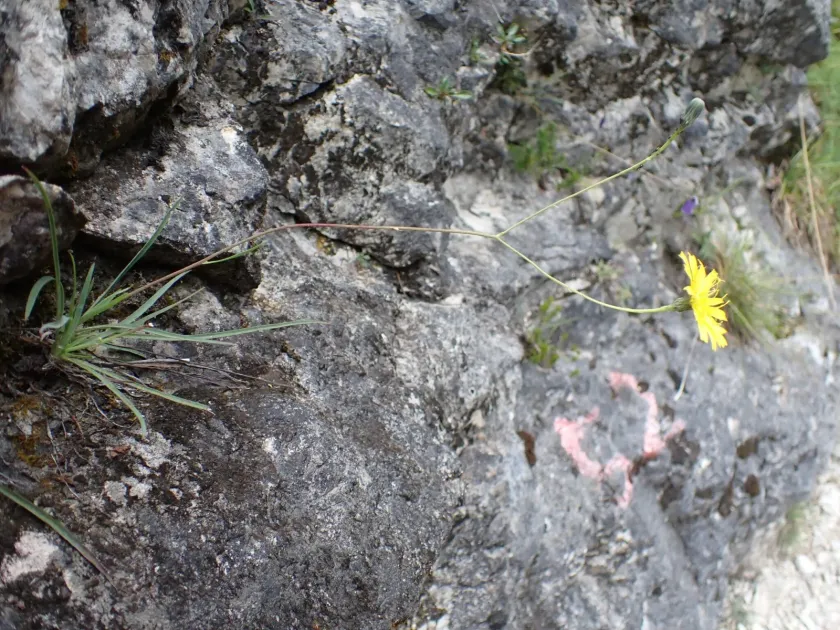
Description
Growing requirements
The leek-leaved hawkweed (Hieracium porrifolium) is a perennial herbaceous plant belonging to the Asteraceae family. It is native to alpine regions, where it has adapted to survive in harsh environmental conditions.
This species thrives in well-drained, limestone-rich rocky soils. It is notably resilient to nutrient-poor soils, making it an excellent candidate for ecological restoration in high-altitude terrain.
The plant requires full sun exposure and is highly tolerant of significant temperature fluctuations. It possesses a robust root system that helps it maintain stability in shifting scree or rocky slopes.
Botanically, it is recognized by its lanceolate, leek-like foliage and upright stems reaching heights of 20 to 50 cm. The flowers are bright yellow, typical of the hawkweed genus, and serve as a nectar source for alpine pollinators.
In agricultural practice, it is utilized primarily for soil stabilization in mountainous grazing areas and as a specialized ornamental plant in alpine rock gardens.
Main diseases and pests
Fungal pathogens associated with waterlogging represent the primary threat to this species. Poorly drained soil inevitably leads to root decay and the decline of the plant population.
Insect pests, including aphids and leaf-eating beetles, can cause significant damage to the foliage during the peak growing season. Integrated pest management should prioritize cultural controls.
Weed competition is a major obstacle, especially in the early stages of plant development when the hawkweed is slow to establish its root system.
Rodents pose a risk during the dormant winter months, as they may feed on the dormant rhizomes beneath the snow cover, leading to structural damage.
To ensure healthy growth, it is essential to monitor site moisture levels and provide adequate space between plants to ensure sufficient air circulation, which prevents the development of powdery mildew.