
Caucasian dandelion
Leontodon caucasicus
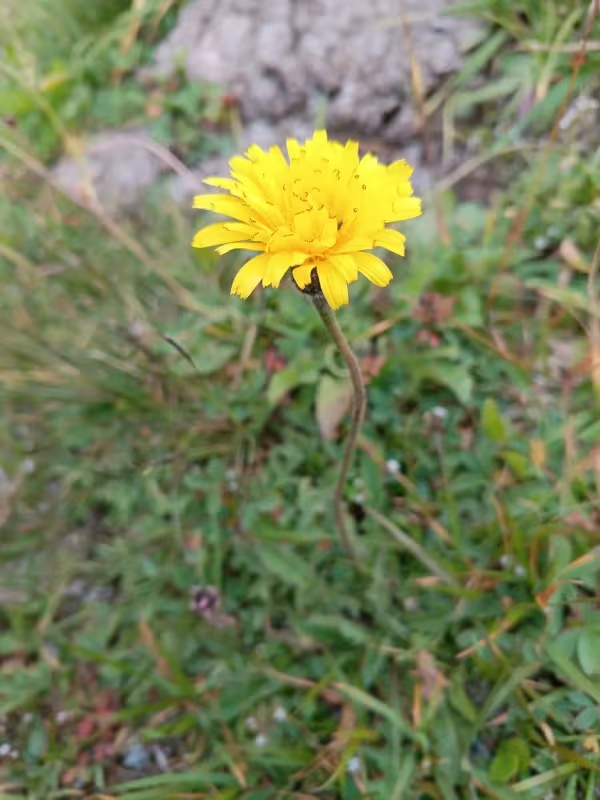
Description
Growing requirements
Caucasian dandelion (Leontodon caucasicus) is a perennial herbaceous plant belonging to the Asteraceae family. It is a vital component of high-altitude ecosystems, valued for its ability to thrive in challenging alpine and subalpine environments.
Native to the mountainous regions of the Caucasus, this species has evolved to tolerate the short growing seasons and high irradiance characteristic of these altitudes. Its natural range is restricted to slopes where environmental conditions are stable.
Regarding soil requirements, the plant prefers well-drained, nutrient-rich, stony, or loamy soils. It avoids waterlogged areas, as stagnant moisture can negatively impact its long-term development and root health.
Botanically, it is distinguished by a basal rosette of leaves and solitary yellow flower heads on elongated stalks. The taproot system is deep and efficient, providing the plant with excellent drought resistance and nutrient uptake capabilities.
In agricultural practice, it is utilized primarily as a valuable forage plant for grazing livestock. Its nutritional profile, particularly in green biomass, makes it a preferred species for managing improved pasturelands in highland areas.
Yield
The yield of Leontodon caucasicus is highly dependent on the altitude and the fertility of the growing site. In native alpine pastures, it contributes a steady amount of biomass that provides essential sustenance for ruminants during the summer grazing season.
Under managed cultivation conditions, yields can be maximized through judicious application of fertilizers. A nitrogen-phosphorus balance is generally recommended to stimulate rosette expansion and vegetative growth.
Optimal planting densities are crucial for maintaining consistent yields across the field. Overcrowding can lead to resource competition, which may diminish the biomass output of individual plants if not properly monitored.
Harvesting for forage should ideally occur before seed maturation to ensure the biomass remains tender and nutrient-rich. Proper timing helps to manage the energy allocation of the plant for seasonal regrowth.
The species displays strong regrowth characteristics. Under adequate rainfall or controlled irrigation, it is possible to achieve multiple cuts per season, significantly increasing the overall efficiency of the agricultural plot.
Main diseases and pests
Leontodon caucasicus possesses natural chemical defenses that provide resistance against various fungal diseases common to meadow plants. However, poor field management, such as bad drainage, can lead to localized root rot infections.
Pest pressure is generally low in its native mountain range. Nonetheless, sap-sucking insects, such as aphids, can occasionally affect the flower stalks and young leaves, potentially impacting seed quality and overall plant vigor.
Management of pests and diseases is primarily preventative. Ensuring proper spacing and keeping the area free of excess moisture are the most effective ways to maintain a healthy stand without resorting to heavy pesticide use.
Grazing management is also a critical factor. Excessive trampling can cause structural damage to the basal rosette, creating entry points for pathogens and reducing the competitive ability of the plant against invasive weeds.
Regular field scouting allows producers to identify early signs of stress or pest outbreaks. Timely intervention, such as removing heavily affected individuals or adjusting grazing schedules, is essential for preserving high yields.