
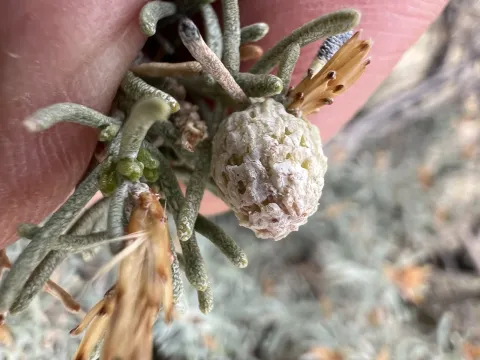
Ericameria
Ericameria
Ericameria is a genus of shrubs and subshrubs belonging to the Asteraceae family. These plants are well-known for their adaptability to arid environments, often found in deserts and semi-arid regions of North America.
What the section contains
 Ericameria brachylepis
Ericameria brachylepis
Ericameria brachylepis
 Ericameria cuneata
Ericameria cuneata
Ericameria cuneata
 Ericameria ericoides
Ericameria ericoides
Ericameria ericoides
 Ericameria parishii
Ericameria parishii
Ericameria parishii
 Ericameria parryi
Ericameria parryi
Ericameria parryi
 Ericameria teretifolia
Ericameria teretifolia
Ericameria teretifolia
 Palmer's goldenbush
Ericameria palmeri
Palmer's goldenbush
Ericameria palmeri
 Pine-leaf goldenbush
Ericameria pinifolia
Pine-leaf goldenbush
Ericameria pinifolia
 Rubber Rabbitbrush
Ericameria nauseosa
Rubber Rabbitbrush
Ericameria nauseosa
Ericameria
The genus includes species that thrive in harsh conditions, making them ideal for xeriscaping projects. They are biologically equipped to handle intense heat and significant water scarcity through specialized foliage and root systems.
Environmental requirements for Ericameria focus on full sun exposure and excellent soil drainage. They perform poorly in heavy, clay-based soils that retain moisture for extended periods, which can lead to rapid decline.
Climatically, these plants are highly resilient to fluctuations in temperature, including both hot days and cool desert nights. They do not require a nutrient-rich environment and can often grow in rocky or sandy soils.
The agrotechnical maintenance for this crop is minimal. Once the plants are established, they require little to no supplemental irrigation, as they have evolved to utilize sparse precipitation efficiently.
The primary threat to the health of Ericameria is poor drainage, which causes root rot. This fungal condition is the leading cause of plant mortality in managed landscapes where over-irrigation is common.
Pest issues are generally infrequent. However, sap-sucking insects like aphids can sometimes colonize new growth during the spring, although they rarely cause significant damage to mature, healthy shrubs.
Spider mites represent a potential threat during periods of extreme drought and stagnant air. These pests can cause leaf yellowing and may require targeted intervention if the infestation becomes severe.
Fungal pathogens such as powdery mildew may develop if the humidity around the canopy remains too high and airflow is insufficient. Proper pruning and spacing are effective prevention strategies.
Integrated pest management should prioritize cultural practices, such as choosing the correct planting site and avoiding excessive nitrogen fertilization, which can attract harmful pests.