
Rubber Rabbitbrush
Ericameria nauseosa
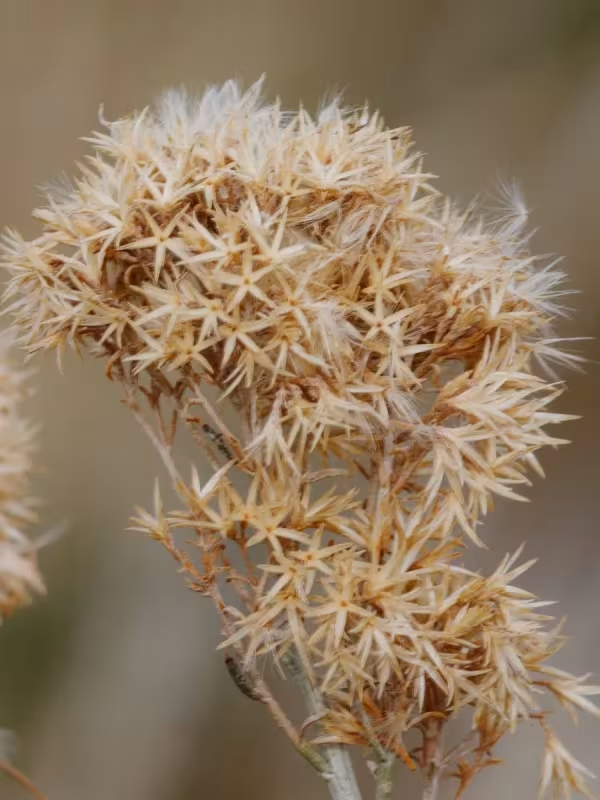
Description
Sowing dates
Rubber Rabbitbrush is typically propagated from seeds, which are sown in late autumn or early spring to allow for natural stratification and improved germination rates.
The seeds should be covered with a thin layer of soil, approximately 0.5 to 1 cm deep, in a well-prepared seedbed that retains enough moisture for initial root development.
Young seedlings require careful monitoring during the first few weeks, ensuring they are not overwhelmed by weeds, which can compete for essential nutrients and sunlight.
Transplanting can be performed once the danger of severe frost has passed, providing young plants with sufficient time to establish their deep root systems.
Row spacing should be optimized based on the intended harvesting method to ensure uniform growth and facilitate the use of mechanical equipment later in the season.
Growing requirements
As a member of the Asteraceae family, this species is highly adapted to arid environments and thrives in nutrient-poor, sandy, or rocky soil types.
The plant requires excellent drainage to prevent root rot, as it is highly sensitive to waterlogged conditions that occur in heavy or compacted clay soils.
Sunlight is a crucial factor for the growth of Rubber Rabbitbrush, as the plant needs full exposure to thrive and maximize the accumulation of resins and latex in its stems.
It displays remarkable tolerance to temperature extremes, making it suitable for high-altitude regions and areas with significant seasonal weather fluctuations.
Fertilization requirements are minimal, as the species has evolved to survive in impoverished soils, making it an excellent candidate for low-input sustainable agriculture.
Yield
The primary agricultural interest in Ericameria nauseosa stems from its ability to produce natural latex, which can be extracted from its stems and leaves for industrial use.
Harvestable biomass production typically stabilizes by the third year, providing a consistent supply of raw material for extraction facilities and chemical processing.
Yields can vary significantly depending on the site-specific ecological conditions, but the crop consistently demonstrates productivity in marginal lands where traditional crops fail.
Extraction technology involves crushing the dried biomass to recover the rubber content, which is a valuable substitute for various synthetic industrial polymers.
The economic potential is enhanced by the plant's dual-purpose nature, providing both rubber and potentially valuable secondary chemical compounds for various markets.
Main diseases and pests
Rubber Rabbitbrush is naturally resistant to many common pests due to its secondary metabolites, specifically the resins and oils present in its vegetative parts.
The most significant threat to plant health is root disease caused by excessive soil moisture, emphasizing the importance of site selection and soil drainage.
While some aphids may occasionally colonize the foliage, they rarely reach densities that justify the use of chemical pesticides, allowing for organic management practices.
Maintaining a clean field free of aggressive weeds is essential, as competition can significantly stress the plants and make them more susceptible to localized infections.
Integrated pest management strategies focusing on environmental control and balanced soil moisture are the most effective ways to maintain a healthy plantation.
Harvesting
Mechanical harvesting is the preferred method for large-scale operations, utilizing specialized mowing equipment to cut the shrub material at the end of the growth season.
The timing of the harvest is critical, as it should occur when the latex concentration in the woody stems and leaves is at its highest, typically during late autumn.
Post-harvest handling requires effective drying of the biomass to reduce moisture content, which is essential for preserving the chemical integrity of the extracted materials.
The harvested material is then shredded and processed in stationary facilities to isolate the rubber and resin components from the cellulose fibers.
Efficient supply chain management ensures that the dried biomass is transported to processing plants promptly, preventing degradation and ensuring high product yield.