
Ericameria brachylepis
Ericameria brachylepis
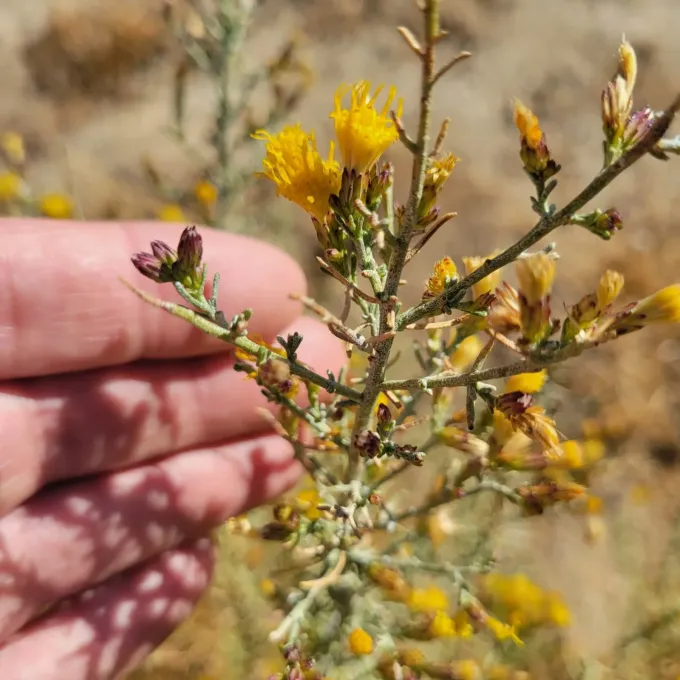
Description
Growing requirements
Ericameria brachylepis is a shrub species belonging to the Asteraceae family, native to the chaparral regions of Southern California and Baja California. This plant is well-adapted to arid environments, characterized by rocky slopes and sandy soils.
Botanically, it is recognized by its glandular foliage, which is often resinous, providing a distinct scent. The plant produces dense clusters of bright yellow flowers, serving as an excellent source of nectar for local pollinators during late summer and autumn.
The climate requirements for Ericameria brachylepis focus on high solar radiation and low relative humidity. It thrives in mediterranean climates where the winter is the primary period for moisture, followed by prolonged dry, hot summers.
Regarding soil conditions, it is essential to provide excellent drainage. The plant is highly intolerant of waterlogged soil, which leads to root rot. Sandy, rocky, or gravelly soils are ideal for ensuring the health and structural integrity of the plant.
In terms of agricultural and horticultural use, it is primarily used in xeriscaping and environmental restoration projects. Its ability to maintain structural form without supplemental irrigation makes it a preferred species for low-maintenance garden designs.
Main diseases and pests
The primary threats to Ericameria brachylepis are pathogenic fungi associated with improper soil drainage. Overwatering or planting in high-clay soil almost inevitably leads to root diseases that are difficult to treat once established.
Pest pressures are generally minor. However, in certain conditions, sap-sucking insects may colonize the tender foliage. Proper spacing and ensuring optimal air circulation are the most effective cultural controls to mitigate these potential threats.