
Ericameria cuneata
Ericameria cuneata
Description
Growing requirements
Ericameria cuneata is a perennial evergreen shrub belonging to the Asteraceae family. It is native to the western regions of North America, where it thrives in rocky environments, steep canyon walls, and crevices within mountainous regions of California and Nevada.
This species is highly adapted to arid conditions and typically grows in well-drained, nutrient-poor, rocky substrates. It exhibits remarkable drought tolerance, making it a specialized plant that requires minimal water input and fails to thrive in soils that retain excessive moisture for long periods.
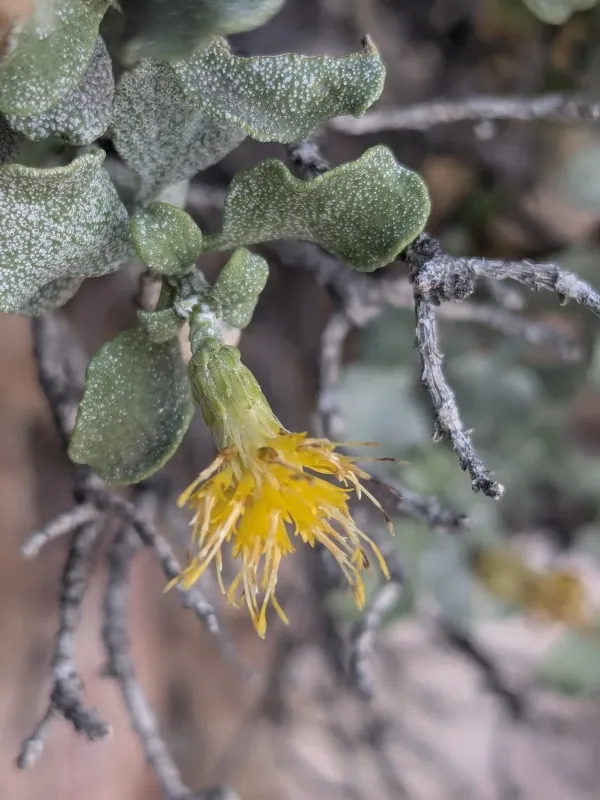
The botanical structure of the plant is defined by its compact growth habit and its distinctive wedge-shaped, leathery leaves. These leaves are a primary adaptation to environmental stress, helping the plant conserve internal moisture during intense heat and dry spells characteristic of its natural habitat.
Blooming occurs in the late summer and autumn, featuring small, yellow, disc-like flower heads. These blossoms serve as a vital resource for various local pollinators, including native bee species and butterflies, reinforcing the ecological significance of the shrub in its indigenous range.
While not an industrial agricultural crop, Ericameria cuneata is gaining popularity in xeriscaping and sustainable garden design. It provides excellent structural value in dry-climate landscapes, requiring little to no maintenance once established and serving as an ideal specimen for rocky, sun-exposed garden sections.