
Enydra sessilis
Enydra sessilis
Description
Growing requirements
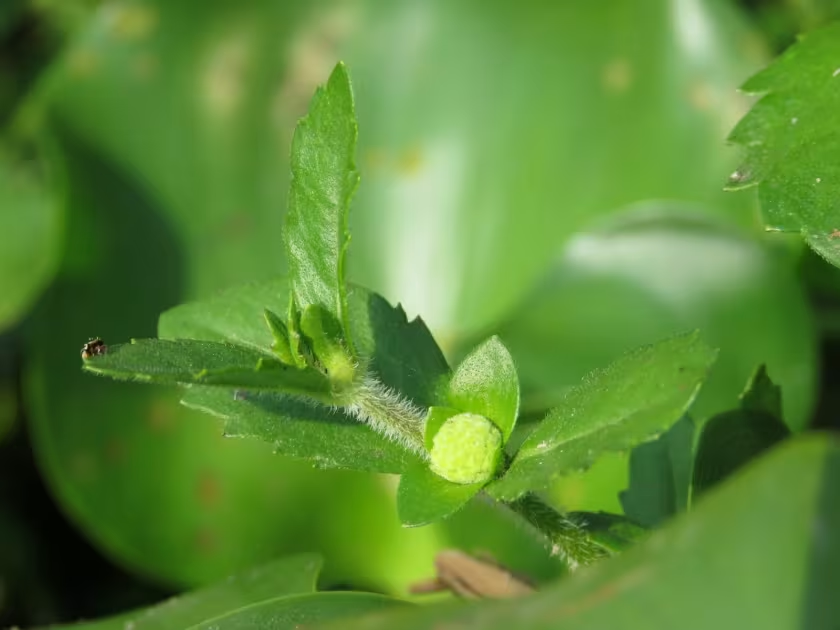
Enydra sessilis is a herbaceous perennial plant belonging to the Asteraceae family. It is primarily recognized as a semi-aquatic plant, commonly found in swampy regions, shallow waters, and humid tropical rice paddies.
The plant thrives in high-moisture environments. Successful cultivation requires a substrate that remains saturated or submerged, mimicking the plant's natural habitat along riverbanks or flooded wetlands.
Temperature management is critical for the healthy development of Enydra sessilis. It performs best in warm tropical or subtropical climates, generally requiring temperatures between 22 and 30 degrees Celsius to reach peak biomass production.
Soil requirements for this species are focused on organic matter content and water-holding capacity. Heavy, nutrient-rich soils that retain moisture provide the best foundation for rapid vegetative propagation through stem cuttings.
Economically, the plant is highly valued for its edible leaves and stems. It is consumed as a vegetable in various Asian cuisines, appreciated for both its distinct taste and its inclusion in traditional herbal medicine for various wellness applications.
Main diseases and pests
Pests such as leaf-eating beetles and aquatic snails are the most common threats to Enydra sessilis, often causing significant damage to the lush green foliage required for harvesting.
Fungal infections, including root rot and various mildews, are prevalent due to the constantly damp environment. These pathogens can spread rapidly if the density of the planting is too high or if water circulation is inadequate.
To mitigate these risks, growers often practice controlled spacing and regular monitoring of the water quality. Stagnant water can exacerbate disease outbreaks, so maintaining a slight flow or refreshing the water periodically is beneficial.
Mechanical control of pests is often prioritized over chemical alternatives to ensure the safety of the harvested edible parts. This involves manual picking of larvae or the use of physical barriers against gastropods.
Integrated pest management strategies focusing on ecosystem balance help sustain the yield without relying heavily on synthetic substances, ensuring the product remains clean for consumption.