
Enydra fluctuans
Enydra fluctuans
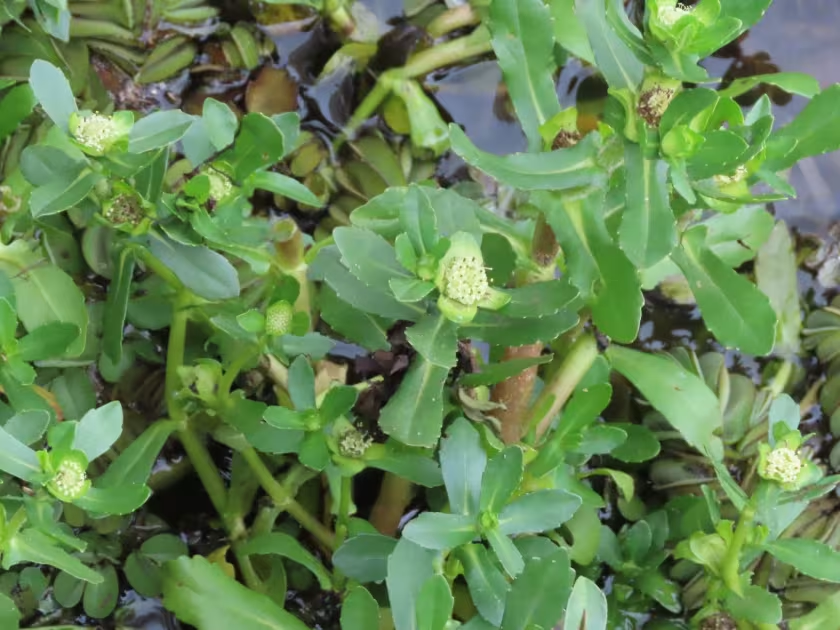
Description
Sowing dates
Enydra fluctuans is a robust aquatic vegetable that is typically propagated through stem cuttings, which ensures rapid and consistent crop establishment.
While seeds can be used, vegetative propagation is preferred in commercial operations because it leads to faster root development from the nodes.
The optimal planting time begins when air and water temperatures rise steadily, ensuring the conditions are favorable for growth throughout the season.
Cuttings should be planted in shallow water or waterlogged soil, ensuring that nodes are in direct contact with the wet substrate to promote rooting.
Proper spacing is essential to allow for adequate water circulation and light penetration, which are necessary for the development of healthy leaf mass.
Growing requirements
As a member of the Asteraceae family, this plant is specifically adapted to riparian environments, thriving along riverbanks and in swampy areas.
The soil or growing medium must be rich in organic matter and possess high water-holding capacity to mimic the plant's natural aquatic habitat.
The crop requires full sun exposure for optimal photosynthesis, though partial shade may be beneficial during periods of extreme heat to prevent foliage scorching.
Temperature management is crucial; the plant requires a warm climate, ideally between 22 and 30 degrees Celsius, as growth significantly slows in cooler conditions.
Water quality is paramount; stagnant, nutrient-rich water is ideal, but the system must be managed to prevent the accumulation of toxic compounds or heavy algae growth.
Yield
Enydra fluctuans is known for its high yield potential due to its rapid regrowth rate, allowing for multiple harvests within a single growing cycle.
Frequent pruning of the growing tips encourages bushier plant development, which significantly increases the volume of marketable greens per square meter.
In well-managed commercial systems, producers can achieve high yields by maintaining optimal water fertility and removing older stems regularly.
The total productivity is highly dependent on light availability and the presence of nitrogen-rich sediments in the growing environment.
Depending on the cultivation intensity, farmers can harvest the crop every 14 to 21 days during the peak growing season without damaging the root stock.
Main diseases and pests
Snails and other aquatic mollusks are the most significant pests, as they often graze on the tender stems and leaves of the plants.
Leaf-eating insects, such as specific caterpillar species, can cause substantial economic damage if populations are not monitored and controlled effectively.
Fungal issues, including root rot, can arise in systems with poor water circulation or excessive planting density that creates an environment favorable for pathogens.
Integrated pest management (IPM) is essential for this crop because it is often consumed raw, making synthetic chemical usage highly restricted.
Sanitation practices, such as maintaining water flow and removing dead organic matter from the cultivation site, are the best defense against major disease outbreaks.
Harvesting
Harvesting is performed manually by selecting and cutting the young, tender apical shoots, typically 15 to 20 centimeters in length.
Early morning harvest is recommended to ensure the plant tissues have maximum turgor pressure, providing the freshest possible product for the market.
Immediately after harvesting, the greens should be rinsed to remove silt and placed in cool, clean water to prevent rapid wilting.
Grading and packing must be done carefully, as the succulent stems are fragile and prone to physical damage during transit and storage.
For storage, keeping the harvested produce in a high-humidity environment at low, positive temperatures is vital to preserve its nutritional value and crispness.