
Enydra anagallis
Enydra anagallis
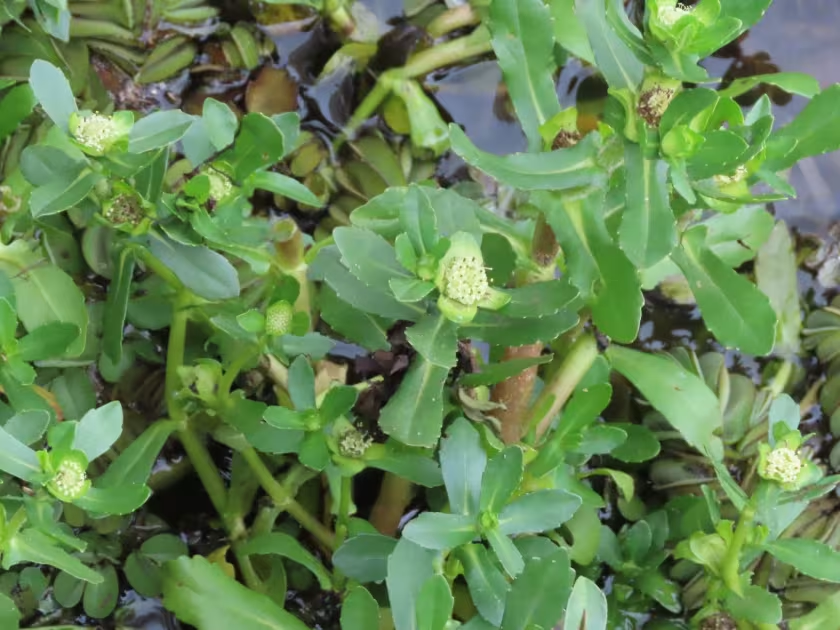
Description
Growing requirements
Enydra anagallis is a member of the Asteraceae family, adapted for growth in aquatic or semi-aquatic habitats. As a semi-aquatic herb, it thrives in shallow wetlands and along the margins of slow-moving streams, where it utilizes its ability to produce adventitious roots at stem nodes to anchor itself firmly.
The plant requires a tropical or subtropical climate to achieve optimal development. It is highly sensitive to cold, and growth slows down significantly when temperatures drop below 20 degrees Celsius. Consistent warmth and high humidity levels are essential for the maintenance of a productive crop cycle.
Soil and substrate requirements are centered on nutrient-rich silt or muddy bottoms. In controlled environments, growers often use nutrient-dense media that mimic these conditions. The pH level of the water and the underlying soil should ideally remain in the neutral to slightly acidic range to facilitate nutrient uptake.
Light availability is a critical factor for the biomass production of Enydra anagallis. As a helophyte, it prefers full sun exposure to stimulate vigorous leaf growth. Shade conditions typically result in elongated, weak stems and lower overall quality, which reduces the market value of the harvested produce.
Agricultural practices for this species focus on maintaining high water quality and proper hydrological management. Stagnant water can lead to oxygen depletion and the accumulation of toxic by-products, so a gentle flow or active aeration system is highly recommended to sustain healthy and fast-growing plant populations.
Yield
The yield of Enydra anagallis is influenced by the density of planting and the frequency of harvesting. The plant exhibits a high regenerative capacity, allowing for frequent pruning and harvesting of the tender shoots throughout the growing season, which maximizes the output of fresh greens.
Host-plant utility is primarily focused on human consumption. The young stems and leaves are a staple leafy vegetable in many regions, valued for their distinctive taste and nutritional profile. They are often used in soups, salads, and traditional medicinal decoctions across Southeast Asia.
Phytochemical studies have indicated that Enydra anagallis contains significant amounts of bioactive compounds, including flavonoids and sesquiterpene lactones. These properties make the plant a subject of interest for both the food industry as a functional food and the pharmaceutical industry for natural extracts.
To maximize harvest yield, farmers use intensive cultivation methods in basins or shallow ponds. By providing optimal nutrient levels via dissolved fertilizers and maintaining a consistent water level, producers can significantly boost the production of high-quality vegetable material per unit of surface area.
Harvesting timing is essential for quality control. It is recommended to gather the crop before the initiation of the reproductive phase, as flowering often correlates with an increase in stem lignification and a potential reduction in the palatable quality of the vegetative parts of the plant.
Main diseases and pests
The primary threats to this crop include fungal pathogens that thrive in high-humidity and low-circulation environments. Leaf spots and stem rot can quickly compromise a crop, necessitating diligent observation and the immediate removal of affected plant sections to prevent the spread of infection.
Pest management is challenging in aquatic systems, with aphids and aquatic weevils being the most common invaders. Integrated pest management (IPM) strategies, which prioritize biological controls and mechanical removal, are preferred over synthetic pesticides to ensure the final product remains safe for consumption.
Environmental stress, such as sudden changes in water chemistry or excessive pollutant runoff, can cause severe yellowing and stunted growth. Maintaining a clean water source and monitoring for nitrogen or heavy metal accumulation is crucial for the long-term viability of the agricultural operation.
Competition from invasive water weeds can significantly suppress the growth of Enydra anagallis. These weeds compete for light, space, and nutrients, making regular pond maintenance and weeding an essential part of the agricultural schedule to ensure the crop has the necessary resources to thrive.
Finally, bacterial wilt or similar systemic infections can be introduced via contaminated water sources or tools. Rigorous sanitation protocols, including the sterilization of tools and the periodic flushing of cultivation basins, are critical to preventing disease outbreaks in intensive farming setups.