
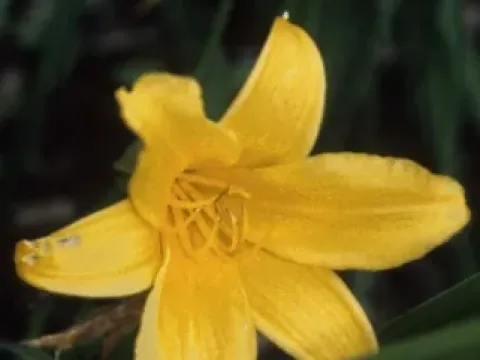
Middendorff's daylily
Hemerocallis middendorfii
Middendorff's daylily (Hemerocallis middendorfii) is a perennial herbaceous plant belonging to the Xanthorrhoeaceae family. In agricultural and horticultural practices, vegetative propagation through division of the root clump is the preferred method.
What the section contains
Middendorff's daylily
The optimal time for dividing and transplanting is early spring, just before the active growth period begins, or early autumn, allowing sufficient time for the plant to establish roots before the first frost.
Seed propagation is less common as it does not guarantee the retention of parental traits. If seeds are used, they require a stratification period of approximately 30 to 45 days in cold conditions to ensure successful germination.
When planting, it is crucial to ensure that the root crown is positioned at the soil surface level. Burying the crown too deep often leads to rot, while shallow planting can cause the roots to dry out during hot weather.
Adequate spacing, generally about 50 to 60 centimeters apart, is necessary to prevent overcrowding. Proper air circulation between plants significantly reduces the risk of fungal infections and promotes vigorous growth.
Native to the Far East, including parts of Siberia, Korea, and Japan, this species is highly adapted to temperate climates. It possesses excellent cold hardiness and can survive severe winters without requiring protective covering.
This daylily performs best in full sun, though it is capable of tolerating partial shade. However, maximal flowering performance and strong stem development are observed when the plants receive at least six hours of direct sunlight daily.
The ideal soil for this crop is fertile, well-draining, and rich in organic matter. Loamy soils with a neutral to slightly acidic pH provide the perfect environment for the extensive root system to develop healthily.
Good drainage is the most vital requirement for cultivation. The plants are highly susceptible to root rot in waterlogged conditions; therefore, raised beds or improved drainage systems should be implemented on heavy or clay soils.
Consistent moisture is needed during the active vegetative and flowering stages. While the plant can tolerate short periods of drought once established, regular deep watering is necessary to produce high-quality blooms.
Rust is the most significant disease affecting daylilies, characterized by orange-brown pustules on the foliage. Management involves the application of systemic fungicides and the removal of infected plant debris.
Pests such as aphids and thrips can cause significant damage to flower buds, leading to distortion and premature bud drop. Regular monitoring and the application of targeted insecticides help in managing these populations.
Root rot, caused by various fungal pathogens in poorly drained soils, can be lethal to the plant. Improving soil aeration and avoiding overhead irrigation during humid weather are essential preventative measures.
Slugs and snails often feed on tender young foliage, especially during moist spring weather. Protective barriers or organic slug pellets are commonly used to prevent substantial damage to the developing leaves.
Sanitation is key to managing threats; removing faded flower stalks and dead foliage at the end of the season prevents overwintering of pests and fungi, ensuring the health of the plant for the following year.