
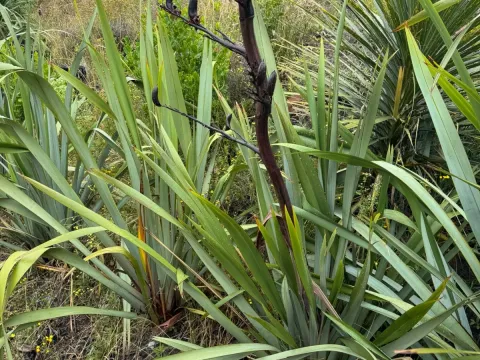
Phormium
Phormium
Phormium, commonly known as New Zealand flax, belongs to the Asphodelaceae family. It is a robust perennial monocot native to New Zealand and Norfolk Island, known for its significant leaf structure.
What the section contains


Phormium
The plant thrives in temperate climates with high humidity. While it can withstand mild frost, extreme cold conditions necessitate protective measures, such as mulching or greenhouse cultivation, to prevent damage.
Phormium requires well-drained, fertile soil rich in organic matter. While it tolerates a variety of soil types, waterlogged conditions must be avoided as they lead to root rot and diminished plant vigor.
The plant is defined by its long, sword-shaped leaves that can grow up to three meters in length. These leaves contain strong fibrous bundles that have been harvested for centuries for various technical applications.
Optimal growth depends on consistent moisture and nutrient availability. Incorporating balanced fertilizers during the spring and summer months significantly boosts the production of leaf biomass.
Phormium is primarily cultivated as a fiber crop. Its long, durable fibers are valued for their high tensile strength, often compared to sisal or Manila hemp in industrial utility.
The fibers are used in the production of heavy-duty ropes, cordage, industrial twines, and specialized paper products. The extractable fiber is highly resistant to saltwater degradation.
Commercial yields are measured by the total weight of leaves harvested per hectare. With proper plantation management, Phormium provides high annual biomass yields, allowing for selective cutting of mature leaves.
Processing involves mechanical decortication to strip the fiber from the leaves, followed by thorough washing and sun-drying to remove residual plant resins and gums.
Beyond its fiber properties, the plant holds significant value in horticulture. Modern breeding programs focus on developing cultivars with diverse foliage colors, expanding its market to the landscaping sector.
Root rot is the most common threat to Phormium plantations, usually caused by stagnant water or poor drainage systems. This fungal issue can decimate roots if not addressed with improved soil structure.
Pests like scale insects and mealybugs often cluster in the dense base of the leaves, drawing nutrients from the plant and causing localized chlorosis and stunted growth.
Slugs and snails can pose a problem during the establishment phase of young plants, causing significant damage to the leaf tissue and potentially killing smaller specimens.
Effective management includes maintaining proper planting distance to ensure good airflow, which significantly reduces the risk of fungal proliferation in dense leaf clusters.
Integrated pest management strategies, focusing on biological controls and manual removal of infested leaf material, are preferred to maintain the quality of the fiber for industrial processing.