
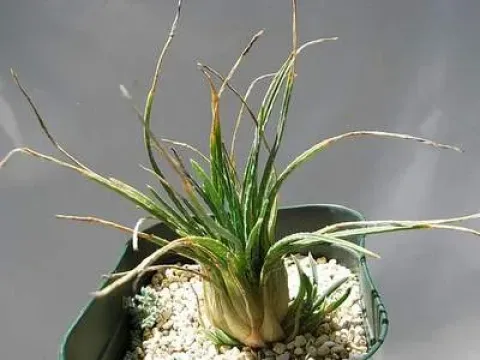
Aloe welwitschii
Aloe welwitschii
Aloe welwitschii is a perennial succulent species belonging to the Asphodelaceae family. Native to the rocky terrains of Central and Southern Africa, this plant has evolved to thrive in environments with erratic rainfall and nutrient-poor soils, making it highly resilient to drought conditions.
What the section contains
Aloe welwitschii
The plant features a compact rosette of succulent leaves that are specially adapted to store water for long periods. During the flowering phase, it develops an elongated inflorescence with tubular flowers, which is a characteristic trait of many Aloe species found in the African savannah and mountainous regions.
For successful cultivation, the plant requires a highly porous, gritty growing medium that mimics its natural habitat. Proper drainage is the most critical factor in its management, as stagnant water is the primary cause of decline and root necrosis in this particular succulent variety.
Environmental conditions should prioritize high solar irradiance and warm temperatures. In temperate climates, greenhouse management is necessary to maintain the thermal consistency required for healthy growth, as the plant cannot tolerate frost or prolonged damp, cold weather conditions.
Economically, Aloe welwitschii is primarily utilized in ornamental horticulture and botanical research collections. Its architectural form makes it a sought-after specimen for xeriscaping projects and arid-climate garden designs where low-maintenance aesthetic appeal is the primary objective.
The main threats to Aloe welwitschii are fungal pathogens, specifically those causing root and crown rot. These diseases typically manifest when the plant is kept in overly moist conditions or provided with poor airflow, leading to the rapid decay of its succulent tissues.
Pest management is essential, with mealybugs and spider mites being the most common threats to the plant's health. These pests can cause significant damage to the epidermis of the leaves; therefore, routine monitoring and the use of appropriate chemical controls are recommended to maintain plant vitality.