
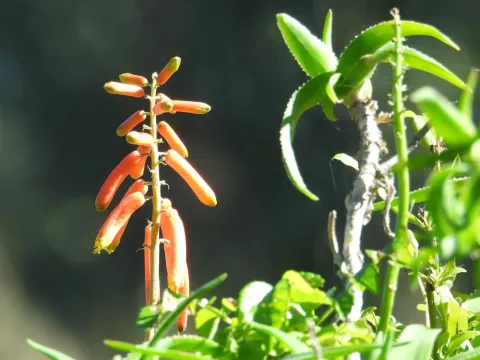
Aloiampelos
Aloiampelos Klopper & Gideon F. Sm.
Aloiampelos is a genus of succulent plants belonging to the Asphodelaceae family, formerly recognized as part of the Aloe genus. These plants are native to Southern Africa, characterized by their climbing or sprawling stems and fleshy leaves adapted for water storage.
What the section contains

Aloiampelos
The crop requires high levels of solar radiation to maintain its structural integrity and vitality. In agricultural settings, it is best placed in open areas or greenhouses where exposure to full sun can be managed effectively throughout the vegetative cycle.
The ideal soil profile for Aloiampelos must prioritize drainage. An ideal growing medium consists of a well-aerated mixture of grit, coarse sand, and a small amount of organic matter, which prevents water from accumulating near the root system.
Temperature management is critical; the plants thrive in warm environments but require a distinct period of lower temperatures during winter to undergo a natural dormancy phase. Frost protection is essential, as the plants are susceptible to cellular damage in freezing conditions.
Watering practices should follow the "soak and dry" principle. The soil should be thoroughly moistened only when completely dry. Overwatering is the primary cause of physiological failure in this crop, as it induces tissue decay rapidly.
The most significant threat to Aloiampelos is root rot, caused by fungal pathogens that thrive in consistently damp soil. This condition is often fatal if not detected early, leading to systemic collapse of the plant's vascular structure.
Common insect pests include mealybugs and scale insects. These pests cluster in the crevices of the leaves and stems, extracting sap and weakening the plant, which often leads to stunted growth and reduced ornamental or market value.
Integrated pest management strategies are advised, beginning with cultural controls such as improving air circulation and ensuring optimal light exposure. Manual removal or targeted application of organic-friendly insecticidal soaps is effective for early infestations.
To mitigate the risk of infection, it is recommended to keep the foliage dry during watering and provide adequate space between individual plants. Proper hygiene in the growing environment helps prevent the spread of pests and diseases.
If chemical intervention becomes necessary, one should use systemic pesticides during the active growth period. Always ensure that the chosen treatment is compatible with succulent species to avoid phytotoxic reactions on the delicate leaf surfaces.