
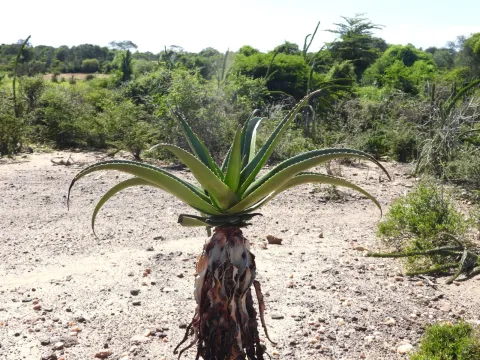
Aloe vaombe
Aloe vaombe
Aloe vaombe is a striking arborescent succulent belonging to the Asphodelaceae family, native to the arid regions of Madagascar. It is characterized by a thick, woody stem and a large, dense rosette of succulent leaves that can reach impressive sizes in favorable conditions.
What the section contains
Aloe vaombe
To cultivate this species effectively, a warm climate with consistent temperatures is required. The plant thrives in full sun, which is essential to maintain the structural integrity and healthy coloration of its foliage, preventing it from becoming elongated or weak.
The choice of soil is critical for Aloe vaombe, as the root system is highly susceptible to rot if moisture accumulates. A well-draining, porous substrate consisting of coarse sand, perlite, and a small amount of mineral-based soil is recommended for container or field planting.
Watering requirements follow a strict regime of seasonal variation. During the peak growth season, the soil should be watered thoroughly only after it has dried out completely. Throughout the dormant winter season, water should be withheld almost entirely to mimic natural drought cycles.
Agrotechnical management includes proper spacing if planting in groups to ensure adequate airflow around the base of the plant. Since it is a slow-growing species, weed management around the root zone is vital, especially in the early stages of establishment, to prevent competition for nutrients.
Common threats to Aloe vaombe include fungal pathogens caused by overwatering or poor ventilation. Root rot and stem rot are the primary concerns, often manifesting as softening of the base or dark, water-soaked patches on the leaves that spread rapidly in humid conditions.
Pests such as mealybugs and scale insects can infest the dense rosettes, hiding at the base of leaves where they are difficult to reach. Regular inspection of the leaf axils is necessary to detect early signs of infestation and prevent colonization.
Aphids may occasionally attack the tender inflorescences during the flowering season. While rarely fatal to the main plant, they can reduce seed yield and weaken the overall vitality of the bloom, necessitating targeted biological or chemical control if populations become high.
Mites can also pose a problem in dry, enclosed environments, leading to distorted growth and discolored spots on the leaf surface. Increasing ventilation and maintaining optimal plant health are the best preventative measures against these common succulent pests.
Environmental stress, particularly sudden exposure to freezing temperatures, acts as a physiological threat, causing permanent tissue damage. Protecting the plants during cold snaps or ensuring they are in frost-free locations is essential for long-term survival and health.