
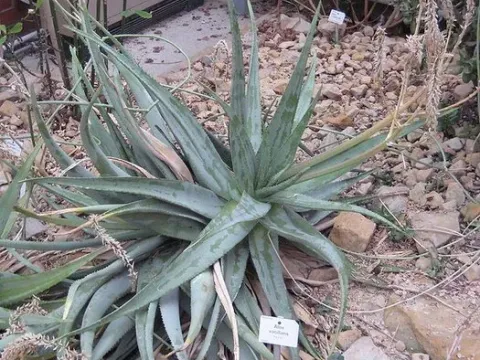
Aloe vacillans
Aloe vacillans
Aloe vacillans is a succulent plant species belonging to the Asphodelaceae family. It is native to the mountainous regions of the Arabian Peninsula, primarily flourishing in Saudi Arabia and Yemen.
What the section contains
Aloe vacillans
This species is well-adapted to arid environments, featuring thick, succulent leaves that store water to sustain the plant through long periods of drought. In its natural habitat, it grows on rocky slopes and within cliff crevices.
For successful cultivation, Aloe vacillans requires full, direct sun exposure. Providing adequate light is essential for maintaining the plant's structural integrity and preventing etiolation, which is common when light levels are insufficient.
The ideal soil for this species must be highly porous and well-draining. A mixture of gravel, coarse sand, and a small amount of potting soil is recommended to replicate the rocky environment where it natively thrives.
Watering requirements are minimal; the soil must be allowed to dry out completely between waterings. During winter dormancy, the plant requires very little water to avoid the risk of root rot, which is the most frequent cause of failure in cultivation.
The primary threat to Aloe vacillans is fungal root rot caused by overwatering or poor drainage. Excess moisture in the root zone quickly damages the plant's delicate tissues, making recovery difficult once symptoms appear.
Mealybugs are the most persistent insect pests for this species. They tend to cluster in the tight spaces between leaves, making them difficult to detect early, so regular inspections are crucial for early intervention.
Spider mites can also become a problem in low-humidity environments, leading to unsightly scarring on the leaf surface. Increasing air circulation and maintaining proper humidity levels help mitigate these risks.
Leaf spot diseases may occur when there is poor ventilation combined with high atmospheric moisture. To prevent this, ensure that the plant is placed in an area with good airflow to allow moisture to evaporate quickly from the leaf surfaces.
To ensure long-term health, avoid over-fertilization, as this encourages rapid, weak growth that is more susceptible to both pests and diseases. Use balanced, low-nitrogen fertilizers specifically formulated for desert succulents.