
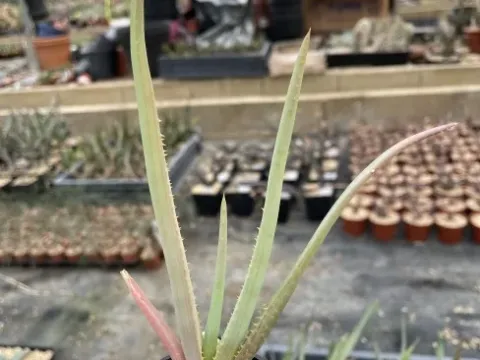
Aloe teissieri
Aloe teissieri
Aloe teissieri is a unique species of succulent plant belonging to the Asphodelaceae family. This species is endemic to the island of Madagascar, where it grows in specific rocky environments, adapting to nutrient deficiencies and intense solar radiation.
What the section contains
Aloe teissieri
Botanically, the plant is characterized as a herbaceous succulent with a shortened stem and a dense rosette of leaves. The leaves are lanceolate, often with a characteristic glaucous hue and prominent spines along the margins, which helps the plant retain moisture in arid climate conditions.
The crop is highly demanding regarding lighting: full and healthy development requires bright direct sunlight, as the plant quickly loses its ornamental value and tends to etiolate in the shade. The optimal temperature range for active growth is between +20 and +28 degrees Celsius.
Aloe teissieri has strict requirements for soil conditions: the substrate must be as loose as possible and possess excellent drainage. A mixture of sod soil, coarse-grained sand, and fine gravel is considered optimal, ensuring no stagnant moisture in the root zone.
Irrigation must be strictly controlled, especially during the winter dormant period. It is essential to adhere to the principle of allowing the root ball to dry out completely between waterings, as excessive humidity inevitably leads to root system rot and the death of this sensitive plant.
The primary threat to the crop is waterlogging of the substrate, which triggers the development of root and stem rot. If soft spots are detected on the leaves, it is necessary to immediately reduce watering and revise the pot's drainage system.
Among pests, mealybugs and spider mites pose the greatest danger. These insects multiply rapidly in the dry air of indoor spaces, sucking sap from the leaves, which leads to rosette deformation and a weakened plant immune system.
To combat pests, regular inspection and wiping of leaves with a damp cloth are recommended. In cases of massive infestation, the use of specialized systemic insecticides is appropriate, though dosage must be strictly monitored to avoid chemical burns to the tissues.
In closed-ground conditions with poor ventilation, the plant may be affected by fungal diseases such as anthracnose or leaf spot. Prevention involves maintaining optimal air circulation around the plant.
The immunity of Aloe teissieri directly depends on maintaining a proper dormant period. If the plant is not provided with a cool winter rest accompanied by restricted watering, it becomes susceptible to any infectious agents due to biological exhaustion.