
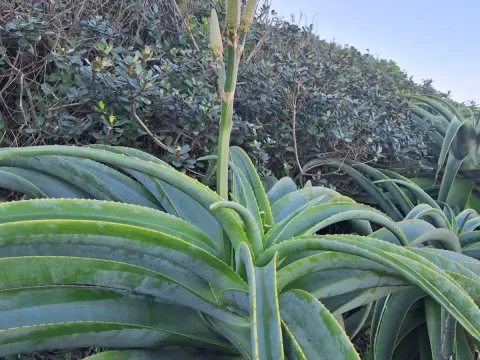
Aloe thraskii
Aloe thraskii
Aloe thraskii is a prominent arborescent succulent belonging to the Asphodelaceae family. Native to the coastal regions of KwaZulu-Natal in South Africa, this species has evolved to thrive in specialized environments characterized by salt air and sandy substrates.
What the section contains
Aloe thraskii
The plant requires full sun exposure and excellent drainage to maintain its structural integrity. In an agricultural or horticultural setting, the soil must be porous and sandy to prevent moisture retention, mimicking the natural coastal dunes of its original habitat.
Environmental conditions should prioritize warm, frost-free climates. While established plants are tolerant of high heat and coastal winds, they require protection from severe frost, which can severely damage the thick, succulent leaves and the main stem.
Proper cultivation involves careful light management. Aloe thraskii demands intense light levels throughout the year. If the plant is kept indoors or in a greenhouse, it must be positioned in the brightest possible spot to prevent etiolation and maintain the aesthetic value of its rosette.
Watering requirements are strictly minimal, especially during the dormant season. The irrigation strategy should follow a dry-wet cycle, where the soil is allowed to dry out completely before the next application of water to avoid root suffocation and crown rot.
Pest management for Aloe thraskii primarily focuses on common succulent pests like mealybugs and scale insects. These insects often hide in the dense leaf bases, making manual removal or systemic treatment necessary during the early stages of infestation.
Root rot, caused by pathogenic fungi such as Phytophthora or Pythium, remains the most significant threat to the plant's health. Improving soil aeration and strictly controlling irrigation cycles are the most effective cultural practices to mitigate these risks in managed plantations.