
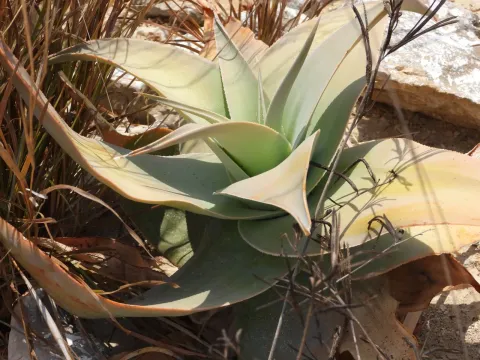
Aloe viguieri
Aloe viguieri
Aloe viguieri is a distinctive succulent species belonging to the Asphodelaceae family. This plant is endemic to Madagascar, characterized by its compact structure and thick, lanceolate leaves that often feature intricate surface patterns typical of arid-adapted flora.
What the section contains
Aloe viguieri
In its native habitat, the species thrives on limestone outcrops, which dictates its preference for mineral-rich, highly porous, and well-draining substrates. In agricultural or horticultural settings, standard potting soil is insufficient and must be amended with grit, pumice, or coarse sand to ensure rapid water runoff.
The plant requires intense, bright light to maintain its structural integrity and leaf coloration. If grown indoors, a south-facing window or high-output LED supplemental lighting is often necessary to prevent etiolation, which weakens the plant's overall health.
Temperature management is critical: the species prefers warm days ranging between 18 and 25 degrees Celsius. During the dormant winter season, cooler temperatures, ideally around 12 to 14 degrees Celsius, are recommended to simulate the natural climatic cycle and encourage future growth.
Watering practices should follow the soak-and-dry method. It is essential to allow the substrate to dry out completely between irrigation cycles, as Aloe viguieri is highly susceptible to root system collapse if left in consistently moist or saturated conditions.
The primary threats to Aloe viguieri are fungal infections caused by overwatering, specifically root rot pathogens like Phytophthora. These conditions often manifest as soft, discolored leaf bases and an overall loss of rigidity in the plant.
Mealybugs are the most common insect pests, often hiding deep within the leaf axils. Their feeding activity leads to stunted growth and provides entry points for opportunistic secondary infections.
Scale insects can also infest the leaves, attaching themselves to the epidermis. Regular monitoring is necessary, as scale can be difficult to remove once they have established a heavy infestation on the tough, waxy foliage.
Maintaining proper air circulation is the best preventive measure against pests and fungal pathogens. Crowded conditions in nursery environments significantly increase the likelihood of rapid pest spread between individual plants.
If chemical interventions are required, systemic insecticides or fungicides should be applied carefully. Always test a small portion of the plant first to ensure no phytotoxic reaction occurs on the succulent leaf tissues.