
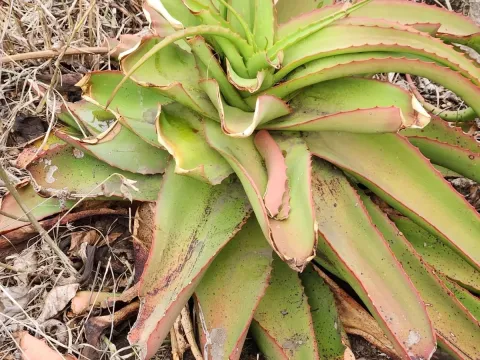
Aloe vanbalenii
Aloe vanbalenii
Aloe vanbalenii is a distinctive succulent member of the Asphodelaceae family, native to the rugged terrains of KwaZulu-Natal in South Africa. It is known for its dramatic architectural form and intense color transformation based on light exposure.
What the section contains
Aloe vanbalenii
The plant features large, recurved, succulent leaves that form sprawling rosettes up to a meter wide. Under strong sunlight, the foliage shifts from green to a vibrant copper or red, which is a key adaptive mechanism for surviving in open, high-exposure environments.
Success in cultivation requires a climate that mimics its arid homeland. The plant thrives in temperatures between 20°C and 30°C and requires a significant amount of direct sunlight to maintain its compact growth habit and vivid leaf coloration.
Soil requirements for Aloe vanbalenii are strictly centered on drainage. A specialized cactus or succulent mix is mandatory, ideally composed of gritty components like pumice, coarse sand, and perlite, which prevent moisture retention around the roots.
Agrotechnical practices involve a "soak and dry" watering approach. During the active growing season, provide water only when the substrate has completely dried out. During the dormant winter phase, keep the plant almost entirely dry to prevent physiological stress.
The most severe threat to Aloe vanbalenii is root rot caused by poor soil drainage or overwatering. This condition acts rapidly, especially when ambient temperatures are low, and can be fatal to the succulent's root structure.
Mealybugs are the primary pest concern. These insects congregate in the leaf axils, hiding from light and moisture, and feed on the plant's sap. Systematic inspection of the tight leaf bases is necessary to catch infestations early.
Scale insects present a secondary risk, manifesting as small, hard brown bumps on the leaf surface. They are difficult to remove once established and can severely weaken the plant's structural integrity if left unchecked.
Aphids may occasionally attack the developing inflorescences. While they rarely kill the plant, they can deform the flowers and reduce the plant's ornamental appeal during the blooming season, requiring timely intervention with contact insecticides.
Fungal leaf spot diseases are usually a sign of poor air circulation and high humidity. Providing adequate space between plants and ensuring a steady flow of fresh air are essential management practices to keep the foliage healthy and blemish-free.