
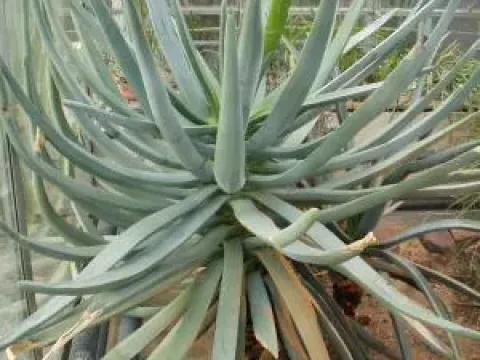
Aloe suzannae
Aloe suzannae
Aloe suzannae is a rare and distinct succulent species belonging to the Asphodelaceae family. This plant is a native endemic to Madagascar, evolved to survive in highly specialized arid environments with intense heat and limited rainfall.
What the section contains
Aloe suzannae
The morphology of the plant is defined by its robust stem and dense rosettes of fleshy, grey-green leaves. These leaves are equipped with small marginal teeth, serving as a biological adaptation to resist drought and protect the internal water storage tissues.
Cultivation of this species requires specific soil conditions, characterized by excellent drainage. A gritty substrate composed of sand, pumice, or perlite is essential to prevent root rot, as the species is highly sensitive to moisture accumulation.
Light requirements are very high, as the plant thrives in full sun exposure. In artificial or indoor environments, providing bright, unfiltered light is necessary to maintain the plant's structural integrity and avoid etiolation.
Currently, the agricultural and horticultural significance of Aloe suzannae is centered on conservation and botanical collections. As an endangered species, its propagation is carefully managed to preserve biodiversity and prevent the loss of this unique plant genetic resource.
The primary threat to the vitality of Aloe suzannae is the development of fungal infections caused by excessive irrigation. Over-watering creates an anaerobic environment in the soil, which leads directly to root necrosis and total plant failure.
Pest pressures are largely limited to mealybugs and spider mites, which exploit the plant's leaf axils and surfaces. These pests pierce the succulent tissue to feed on sap, which not only causes direct damage but also weakens the plant's resistance.
Proactive management involves monitoring leaf surfaces and maintaining a dry environment around the crown of the plant. If an infestation occurs, targeted application of appropriate insecticides is recommended, ensuring the product does not burn the sensitive succulent skin.
Physiological stress can make the plant susceptible to secondary bacterial infections. Ensuring that the plant has adequate space and airflow is a key agro-technical measure to reduce humidity and hinder the growth of pathogenic organisms.
Proper hygiene during repotting and the use of sterile tools are critical to preventing the spread of diseases. As the plant grows slowly, any damage sustained from pests or disease can take a long time to recover, making prevention the best strategy.