
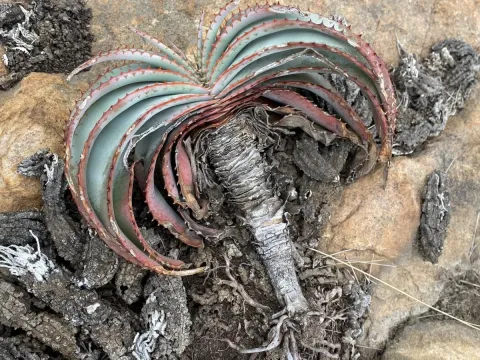
Aloe suprafoliata
Aloe suprafoliata
Propagation of Aloe suprafoliata is primarily achieved through seeds, which should be sown in a well-draining, mineral-based succulent mix during the spring season.
What the section contains
Aloe suprafoliata
The seeds require a warm environment, ideally between 20 and 25 degrees Celsius, and must be kept slightly moist but never waterlogged to ensure high germination rates.
Once seedlings have developed their first few true leaves, they should be carefully transplanted into individual small pots to allow their roots to establish properly.
Slow and steady growth is characteristic of this species, so patience is required during the initial stages of development when the plants are most vulnerable.
Light levels should be gradually increased for young plants, allowing them to acclimate to full sun exposure over several weeks to prevent leaf scorching.
Aloe suprafoliata is a member of the Asphodelaceae family and originates from the mountainous regions of South Africa, particularly the Drakensberg range.
This species is well-adapted to high-altitude environments, characterized by rocky slopes and excellent drainage, which must be replicated in cultivation.
The plant is famous for its unique growth habit, where the leaves are arranged in a vertical stack in young plants before spreading into a rosette as it matures.
Soil requirements demand a gritty, porous mix consisting of coarse sand, pumice, and minimal organic matter to prevent the accumulation of excess moisture.
While the plant thrives in full sunlight, it is also capable of tolerating cool nights, making it a robust species for Mediterranean-style garden landscapes.
The most significant threat to the health of Aloe suprafoliata is the development of root rot caused by stagnant water or a soil mix that retains too much moisture.
Mealybugs are the most common pests, often hiding deep within the tight leaf axils, making them difficult to detect and eradicate without close inspection.
Fungal leaf spot diseases can occur if the foliage remains wet for extended periods, especially in environments with high humidity and poor air circulation.
Scale insects may also attach themselves to the leaves, feeding on the plant's sap and potentially causing stunted growth and yellowing of the foliage.
Integrated pest management strategies should focus on maintaining dry, airy conditions and utilizing appropriate systemic pesticides when infestations are identified.