
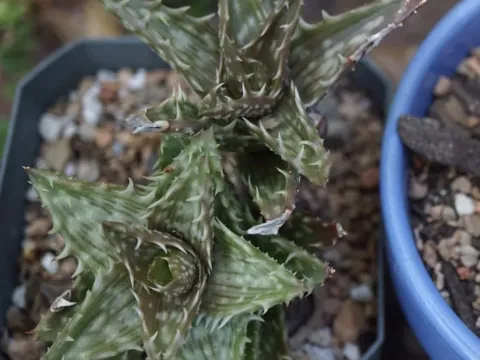
Aloe squarrosa
Aloe squarrosa
Aloe squarrosa is a distinct succulent belonging to the Asphodelaceae family, naturally occurring in the arid, rocky landscapes of Socotra Island, Yemen. It is highly valued for its striking, recurved leaves with white spots.
What the section contains
Aloe squarrosa
The plant exhibits a sprawling growth habit, with long, fleshy stems that can reach significant lengths over time. Its botanical structure is perfectly adapted to survive periods of intense drought and bright direct sunlight.
Cultivation requires a highly porous and inorganic soil mix, typically composed of succulent-specific compost, pumice, or grit. Proper drainage is the single most important factor to ensure longevity.
The species thrives in bright, indirect to direct light. Providing adequate solar radiation is essential to maintain the vibrant leaf coloration and the typical compact, recurved shape of the foliage.
Environmental management involves warm summers and cool, dry winters. Maintaining a strict watering schedule, where the soil is allowed to dry out completely between waterings, is vital for plant health.
Root rot is the primary physiological disorder affecting Aloe squarrosa, usually caused by stagnant water in the root zone. Once decay sets in, the plant often struggles to recover.
Mealybugs and scale insects represent the most common biological threats to this species. These pests often congregate in the leaf axils, making manual inspection and removal challenging.
Spider mites can also proliferate during hot and dry conditions. Infestations are typically identified by the appearance of fine webs and discolored, chlorotic patches on the leaf surfaces.
Preventative measures include maintaining good air circulation and inspecting new additions to the collection before introducing them to the main plant group.
If chemical intervention becomes necessary, use targeted systemic insecticides labeled for ornamental succulents, following the dosage instructions carefully to avoid phytotoxicity on the waxy epidermis.