
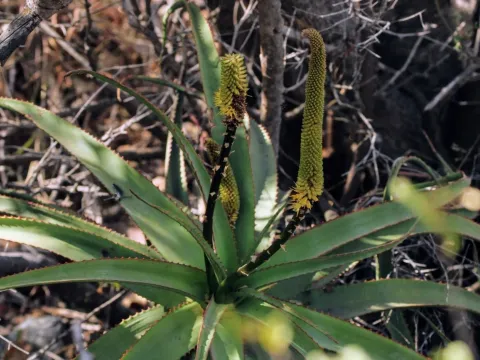
Aloe spicata
Aloe spicata
Aloe spicata, belonging to the Asphodelaceae family, is a distinct succulent species native to the arid landscapes of Southern Africa. It is characterized by its robust stem and dense spikes of tubular flowers, which emerge during the blooming phase.
What the section contains
Aloe spicata
As a drought-tolerant species, this plant requires high levels of solar radiation to maintain its structural integrity and metabolic activity. It is not adapted to high-humidity environments, making proper airflow a critical factor for successful greenhouse production.
The substrate must be exceptionally well-draining, typically consisting of a mix of sand, pumice, and loam. Water retention in the root zone is the primary cause of failure, necessitating a soil composition that facilitates rapid drainage.
Temperature management is crucial, as Aloe spicata is sensitive to frost and extreme cold. The ideal environment mimics the subtropical conditions of its origin, maintaining consistent temperatures within the +20°C to +30°C range for optimal vegetative growth.
Fertilization should be restricted to the active growing season, utilizing low-nitrogen formulations designed specifically for succulents. Over-fertilization leads to soft, succulent growth that is highly susceptible to mechanical damage and pest infestation.
Pathogenic fungi, particularly those causing root rot, are the most significant threats to the long-term viability of an Aloe spicata plantation.
Common agricultural pests affecting this crop include mealybugs, which thrive in sheltered crevices, and spider mites, prevalent in arid and warm conditions.
Scale insects can also infest the leaves, puncturing the cuticle and causing localized tissue necrosis which detracts from the plant's overall aesthetic and medicinal quality.
Physiological disorders resulting from improper environmental controls, such as leaf edema or tissue collapse, are common in poorly managed high-density farming.
- Use of specialized systemic fungicides for fungal prevention.
- Integrated Pest Management (IPM) to control mealybug populations.
- Regular monitoring of soil moisture levels.
- Quarantine protocols for new plant stocks.