
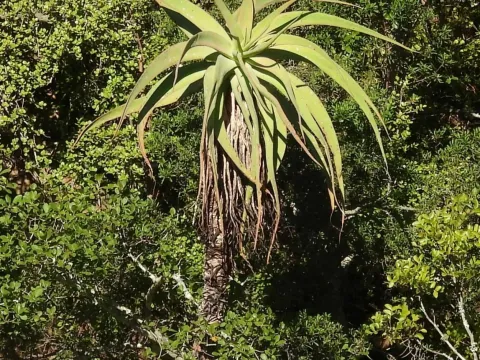
Aloe speciosa
Aloe speciosa
Aloe speciosa belongs to the Asphodelaceae family. This distinct plant is native to the Eastern Cape in South Africa, where it thrives in rocky terrain and mountainous habitats.
What the section contains
Aloe speciosa
Morphologically, this species is a tree-like succulent that can grow quite tall in its natural environment. It features a woody stem topped with a dense rosette of long, glaucous-green leaves that often show reddish-brown margins.
Cultivation requirements focus on mimicking its arid natural habitat. The plant demands full sunlight exposure and thrives in well-drained, gritty soil mixes that prevent moisture from accumulating near the roots.
The climate must be frost-free. While it can withstand short periods of cooler temperatures, Aloe speciosa is essentially a warm-climate plant that requires protection from extreme cold and freezing conditions.
Watering practices are essential for this species. During the active growth phase, it requires moderate watering, but it must be allowed to dry out completely between sessions to maintain healthy root development.
The most common disease affecting this aloe is root rot, typically caused by overwatering or soil with poor aeration. Once the root system is compromised, it is often difficult to save the specimen.
Common pests include mealybugs, which tend to congregate in the protected areas between the leaves. Regular inspection of the leaf axils is necessary to detect infestations before they spread.
Scale insects can also infest the stems and leaves of the plant. Their presence is indicated by small, hard, brown spots that are actually the protective shells of the insects feeding on plant sap.
Fungal leaf spot diseases may appear if there is poor air circulation and high humidity. Ensuring proper spacing and keeping the foliage dry helps prevent these aesthetic and health issues.
Using improper fertilizers, such as high-nitrogen blends, can promote overly succulent and soft growth that is more susceptible to both mechanical damage and pest attacks.