
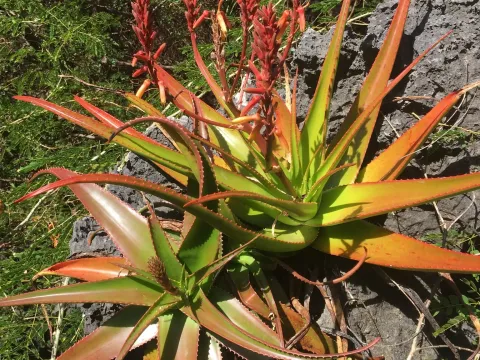
Aloe socialis
Aloe socialis
Aloe socialis is a unique perennial succulent species belonging to the Asphodelaceae family. Native to the arid regions of Southern Africa, this plant has evolved to survive in harsh rocky environments by storing water in its dense, fleshy leaves.
What the section contains
Aloe socialis
The botanical structure is characterized by the formation of tight, clustering rosettes that expand outward over time. Its leaves exhibit a distinct greyish-green hue often marked with subtle spots, providing significant ornamental value for collectors and enthusiasts.
Successful cultivation requires high levels of bright, indirect sunlight. While the plant can tolerate some direct sun, midday exposure should be managed to prevent leaf scorch, especially in indoor environments where airflow might be limited.
The growth medium must be highly porous to ensure rapid drainage. A standard mix should include coarse sand, perlite, and a small amount of grit, mimicking the rocky, nutrient-poor soils of its natural habitat to maintain the plant's compact form.
Watering requirements follow the cycle of the seasons; during the active growth period, water should be applied only when the soil has dried out completely. In winter, the plant enters a dormancy phase and requires very little to no irrigation to prevent rot.
Root rot is the most significant threat to Aloe socialis, primarily caused by overwatering or poorly draining soil. When the roots remain wet for extended periods, the plant loses its ability to uptake nutrients and eventually collapses.
Common pests include mealybugs and spider mites, which prefer the sheltered spaces between the dense leaves. These pests can weaken the plant by feeding on its sap, leading to stunted growth and increased vulnerability to secondary infections.
- Inspect rosettes weekly for signs of webbing or white cottony residue.
- Treat pest infestations with specialized horticultural soaps or systemic insecticides.
- Prune any blackened or soft tissue immediately to stop the spread of infection.
Low light levels represent a physiological threat, often causing the plant to etiolate. This elongation makes the rosette weak and prone to snapping, while also making it more susceptible to opportunistic fungal diseases due to stressed metabolism.
Maintaining proper hygiene is essential for disease prevention. Keep the surface of the soil free from decaying organic matter, and ensure that the succulent is placed in an area with good ventilation to keep the foliage dry.