
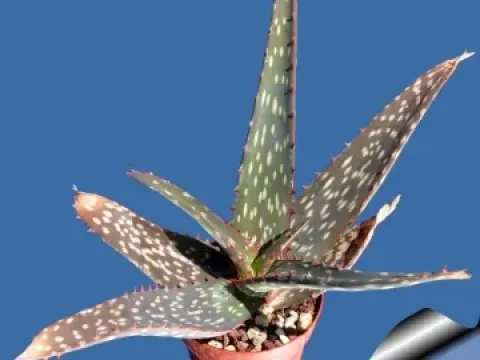
Aloe sinkatana
Aloe sinkatana
Aloe sinkatana is a succulent perennial plant belonging to the Asphodelaceae family. It is native to the mountainous regions of Sudan, specifically the Sinkat area, which influences its physiological adaptation to rocky, well-draining substrates and arid conditions.
What the section contains
Aloe sinkatana
To cultivate this species successfully, bright, indirect light is essential. While the plant can tolerate direct morning sunlight, intense midday heat can cause leaf scorch. A stable environment with temperatures between 20°C and 25°C during the growing season is ideal for robust development.
The soil requirements are strict: the substrate must be highly porous and inorganic-heavy to prevent root suffocation. A mixture of pumice, coarse sand, and a small amount of potting soil provides the necessary drainage for healthy root respiration.
Watering should be approached with caution, following the soak-and-dry method. During the summer, water only when the potting medium is entirely dry; in the winter dormant phase, reduce watering to a minimum to prevent physiological stress and tissue damage.
The plant features a compact rosette of spotted, fleshy leaves that can develop a reddish tint under stress or high light conditions. Its growth habit is relatively slow, making it an excellent candidate for long-term container cultivation in home or greenhouse environments.
The most significant threat to Aloe sinkatana is root rot caused by stagnant water in the substrate. If the base of the plant becomes mushy or discolored, the grower must immediately cease watering and repot the plant into fresh, dry medium, removing all necrotic tissue.
Pests such as mealybugs often hide in the tight spaces between leaf axils. Their presence causes localized yellowing and stunted growth. Manual removal using a cotton swab dipped in isopropyl alcohol is an effective non-toxic treatment for minor infestations.
Spider mites can also become a problem in low-humidity environments. They manifest as tiny webs or speckled foliage. Increasing air circulation and maintaining proper hygiene around the plant collection are the best preventative measures against these opportunistic arachnids.
Fungal infections, often characterized by dark, sunken spots on the leaves, usually indicate poor air circulation or excessive environmental humidity. Improving ventilation is key to mitigating the risk of fungal spread throughout the growing area.
Fertilization should be limited to the active growing season. Over-fertilizing with high-nitrogen compounds promotes succulent tissue that is more susceptible to bacterial infection and pest damage, so a balanced, low-nitrogen formula is highly recommended.