
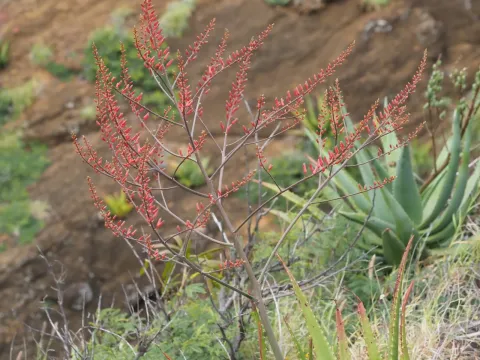
Aloe secundiflora
Aloe secundiflora
Aloe secundiflora is a perennial succulent plant belonging to the Asphodelaceae family. Native to East Africa, particularly Kenya, Tanzania, and Uganda, this species is well-adapted to rocky outcrops and semi-arid savanna environments where it thrives under high light exposure.
What the section contains
Aloe secundiflora
The plant is characterized by its large, arching leaves that often develop a reddish or bronze tint when grown in full sun. These leaves are arranged in a basal rosette and serve as a reservoir for moisture, allowing the plant to withstand prolonged dry seasons typical of its natural habitat.
For successful agricultural or horticultural cultivation, soil drainage is the most critical factor. The root system requires a gritty, highly permeable substrate to prevent waterlogging, which is the primary cause of failure in domestic and commercial setups.
The climate requirements include high thermal input and significant UV exposure. It is a warm-weather plant that does not tolerate frost, making it suitable for year-round outdoor cultivation only in tropical and subtropical zones or controlled greenhouse environments elsewhere.
Watering frequency should be extremely sparse. Growers must wait for the soil to dry out completely between waterings, as the plant uses its internal succulent tissues to buffer against drought. Providing too much water is fatal to this species.
The primary threats to Aloe secundiflora include root and stem rot caused by pathogens like Phytophthora. These are almost exclusively associated with improper watering practices and poor soil structure.
Mealybugs are the most common insect pests encountered in cultivation. They congregate in the tight clusters of the leaf bases, where their feeding patterns can lead to severe stunting and general plant decline.
Scale insects present another challenge, attaching themselves to the firm leaf surface. Their presence is often identified by small brown bumps that, when removed, leave behind damaged plant tissue prone to further infection.
Poor ventilation in greenhouse conditions can lead to fungal leaf spots. These spots degrade the aesthetic and biological value of the plant, often requiring the surgical removal of affected leaves to prevent spread.
Integrated pest management, including monitoring and localized treatments, is essential. Keeping the plant environment clean and ensuring that no stagnant water remains on the leaves or in the soil is the best defense against disease.