
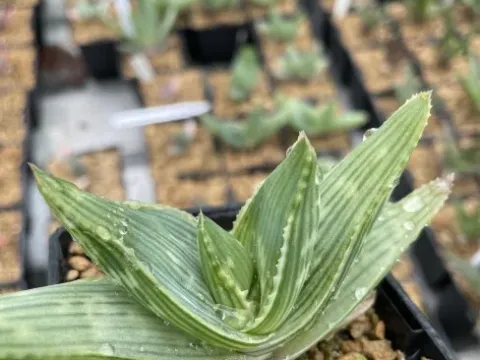
Aloe rigens
Aloe rigens
Aloe rigens is a perennial succulent species belonging to the Asphodelaceae family. Native to arid regions of Africa, this plant has evolved to survive in environments with high solar radiation and low precipitation, making it a specialized xerophyte.
What the section contains
Aloe rigens
The cultivation of Aloe rigens requires a well-drained substrate, typically composed of sand, perlite, and a small amount of loamy soil. Proper drainage is essential to prevent water accumulation, which is the most frequent cause of root damage in this genus.
The plant thrives in full sun exposure. In terms of temperature, it requires warmth, with an optimal range between 20 and 30 degrees Celsius. Exposure to temperatures below freezing will cause severe physiological damage to the fleshy leaves.
Agrotechnical management involves strict adherence to a dry-cycle irrigation method. During the active growth season, water should be applied only when the potting medium has fully dried out, while during dormancy, watering should be reduced drastically.
Economically, Aloe rigens is primarily valued in ornamental horticulture and xeriscaping. Its distinct architectural form makes it a sought-after species for botanical collections and landscaping in Mediterranean or desert-like climates.
The primary threat to the health of Aloe rigens is root rot, induced by excessive moisture or poor substrate aeration. This condition often leads to rapid decay of the entire rosette if not treated in the early stages.
Common pests include the mealybug, which can hide between the succulent leaves, and the spider mite. These pests thrive in hot, dry conditions and can cause significant damage by depleting the plant of its fluids.
Fungal leaf spot diseases may occur if the ambient humidity remains consistently high or if there is insufficient air movement. These diseases present as discolored patches that can spread if environmental conditions are not corrected.
Physical injury to the leaves during maintenance can create entry points for opportunistic bacteria or fungi. Therefore, handling must be performed with caution to maintain the integrity of the plant's epidermis.
To mitigate these risks, growers should employ a preventative strategy involving optimal spacing for air circulation, the use of sterile substrates, and prompt isolation of any affected specimens.