
Aloe richaudii
Aloe richaudii
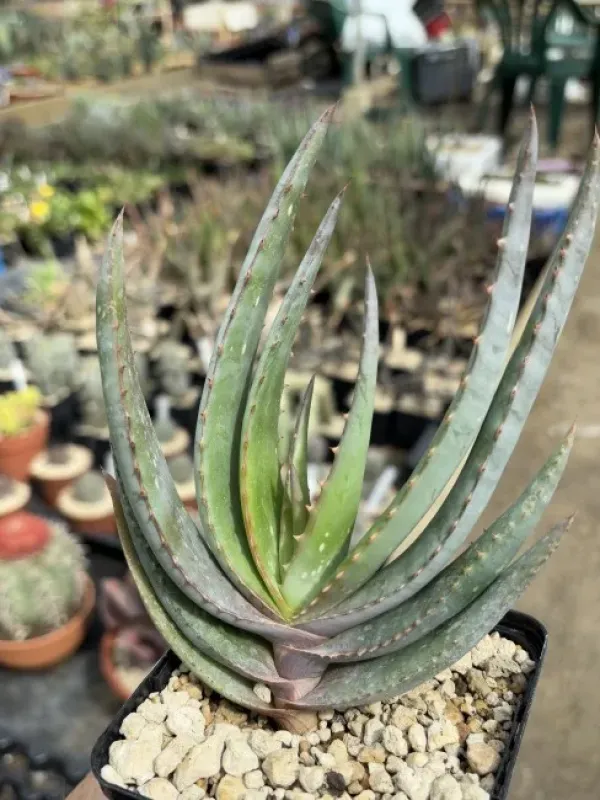
Description
Growing requirements
Aloe richaudii belongs to the Asphodelaceae family and is highly appreciated for its distinctive, shrubby growth habit. Its slender, branching stems and attractive foliage make it a unique addition to any collection of succulent plants.
Native to Madagascar, this species is well-adapted to arid, rocky environments with high sun exposure. In cultivation, it thrives best when provided with bright, direct light and a well-ventilated environment that mimics its natural habitat.
The ideal temperature for active growth ranges between +20 and +28 degrees Celsius. During the winter months, it is essential to provide a period of rest with cooler temperatures, ideally between +12 and +15 degrees, to promote overall plant health.
The growing medium must be highly porous and well-draining. A mix consisting of potting soil, coarse sand, and perlite or pumice is recommended to ensure that water does not accumulate around the root system.
Watering practices should be conservative. It is crucial to allow the soil to dry out completely between waterings, as Aloe richaudii is extremely sensitive to waterlogged conditions which can quickly lead to root rot.
Yield
Aloe richaudii is primarily cultivated for ornamental purposes in greenhouses, conservatories, and as an indoor potted plant. It is prized by collectors for its elegant branching structure and relative rarity in the trade.
Due to its slow growth rate, the production of mature specimens requires time and patience. Agricultural techniques focus on maintaining compact growth and encouraging the development of secondary branches through selective pruning and light management.
While not a major commercial source for medicinal products, like Aloe vera, this species possesses the typical phytochemical profile of the genus. Its usage remains strictly focused on aesthetic contribution to botanical displays.
Vegetative propagation is the preferred method for increasing stock. Healthy side shoots or cuttings should be allowed to callous over for a few days before being planted in dry, sandy substrate to ensure successful rooting.
Fertilization should be applied sparingly, using balanced mineral fertilizers specifically designed for succulents, primarily during the peak of the growing season, to support robust development without inducing rapid, weak growth.
Main diseases and pests
Root and stem rot represent the most significant threat to the survival of Aloe richaudii. These conditions are almost exclusively caused by overwatering or by placing the plant in a substrate with poor drainage characteristics.
Mealybugs are the most common pests, often settling in the leaf axils. Regular inspection is necessary, and infestations should be addressed promptly with insecticidal soap or specific horticultural oils to prevent widespread damage.
Spider mites may infest the plant during periods of prolonged low humidity, causing stippling on the foliage. Maintaining appropriate environmental conditions and good air circulation is the best way to prevent these infestations.
Scale insects can also attach themselves to the stems, draining nutrients and weakening the plant. Mechanical removal or targeted chemical treatments are effective measures to maintain the health and beauty of the succulent.
Light deprivation is a common cultural problem, causing the stems to stretch (etiolate) and become fragile. To maintain a strong structure, the plant must be kept in a position where it receives maximum possible solar radiation throughout the day.