
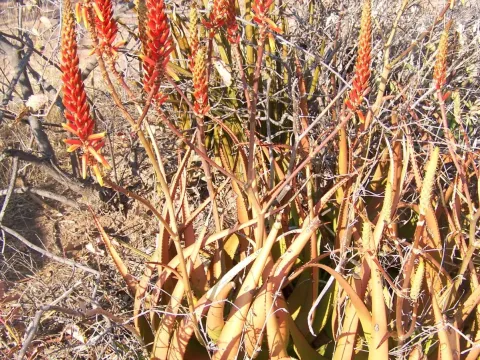
Aloe lutescens
Aloe lutescens
Aloe lutescens is a perennial succulent species belonging to the Asphodelaceae family. It is native to the arid regions of Southern Africa, where it has evolved to thrive in nutrient-poor, rocky substrates.
What the section contains
Aloe lutescens
Botanically, the plant is distinguished by its succulent rosette formation, with leaves that exhibit a characteristic yellowish-green color when exposed to sufficient direct ultraviolet radiation.
For successful cultivation, the soil must be highly porous and well-draining. Incorporating gravel or coarse sand into the growing medium is essential to mimic its natural, fast-draining habitat.
The plant requires full sun exposure for most of the day to maintain its structural integrity and leaf color. In agricultural or greenhouse settings, orientation toward the southern exposure is preferred.
Regarding climate, Aloe lutescens prefers stable, warm temperatures. It lacks frost tolerance, making climate control critical for maintaining year-round vegetative growth in non-tropical zones.
The primary threat to Aloe lutescens is root rot caused by stagnant water in the root zone. Proper water management is the most important factor in the longevity of this crop.
Pest issues often include infestations of mealybugs and spider mites, which exploit the succulent leaves to feed on plant sap, particularly in low-humidity environments.
Fungal leaf spot diseases can emerge if the air circulation is poor, leading to wet conditions around the base of the rosette that encourage pathogen proliferation.
Effective management strategies include ensuring sufficient spacing between plants to maximize airflow and avoiding overhead irrigation that leaves water sitting on the leaves.
Regular monitoring of the leaf axils for signs of pests or decay is a fundamental agricultural practice to prevent localized issues from becoming systemic infections.