
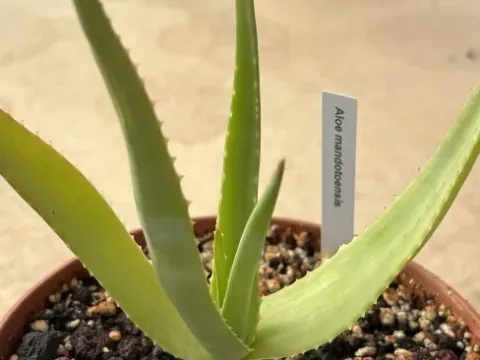
Aloe mandotoensis
Aloe mandotoensis
Aloe mandotoensis is a fascinating succulent species belonging to the Asphodelaceae family. It is endemic to the island of Madagascar, where it occupies specific ecological niches in rocky and arid environments, reflecting its high adaptability.
What the section contains
Aloe mandotoensis
Cultivation of this species requires a porous, well-draining substrate to mimic its natural habitat. A mixture of succulent potting soil combined with volcanic rock or coarse sand is essential to prevent root asphyxiation and rotting, which are common issues in indoor gardening.
The plant thrives under bright, indirect light conditions. While it appreciates high light intensity, prolonged exposure to intense, direct afternoon sun can cause the leaf epidermis to scorch. Providing a south-facing window with filtered light is usually the ideal compromise.
Water management is the most critical aspect of the plant's agrotechnics. The soil must dry out completely between waterings, and in the cooler winter months, the plant should be kept almost completely dry to encourage a dormant phase.
Propagation is typically achieved through the detachment of offshoots produced at the base of the main rosette. It is important to allow the cut surfaces of the offshoots to callus for several days before planting them in a dry potting medium to avoid infection.
The primary threats to Aloe mandotoensis are fungal pathogens, specifically those causing root and crown rot. These conditions are almost exclusively triggered by overwatering, poor drainage, or a lack of proper air circulation around the plant base.
Mealybugs are the most common insect pests, often found nestled in the crevices between leaves. They extract plant sap and can severely weaken the rosette if not managed early through manual removal or the application of specialized systemic insecticides.
Scale insects can also infest this species, creating small brown bumps on the leaves. These pests are difficult to eradicate once established, requiring careful wiping with isopropyl alcohol or treatment with horticultural oils to suffocate the insects.
Spider mites represent a significant risk in low-humidity environments. They cause stippling on the foliage and, if left unchecked, can cover the plant in fine webbing, leading to significant foliage disfigurement and reduced photosynthetic capacity.
Prevention is centered on maintaining clean growing conditions and inspecting plants regularly. Avoid overhead watering to prevent water from accumulating in the center of the rosette, as this is a common entry point for bacterial infections.