
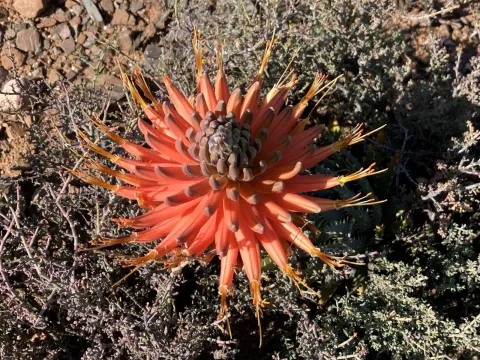
Aloe longistyla
Aloe longistyla
Aloe longistyla is a dwarf succulent belonging to the Asphodelaceae family. This species is highly valued for its compact growth habit and its distinctively textured leaves, which are covered in soft white spines and tubercles, creating a unique appearance.
What the section contains
Aloe longistyla
Native to the arid regions of the Eastern Cape in South Africa, this plant is perfectly adapted to dry and rocky environments. It is a slow-growing species that thrives in challenging conditions where other plants might struggle to survive.
Agricultural success with this species depends largely on the soil medium. A highly porous, well-draining mineral substrate is essential to prevent root rot. Standard potting soil must be amended with grit, pumice, or sand to mimic the natural rocky habitat.
Light intensity is another critical factor for Aloe longistyla. To maintain its compact, sun-stressed coloration and robust health, it requires strong, direct sunlight for several hours each day. Lack of light leads to etiolation and structural weakness.
Watering practices should be strictly controlled, following a cycle that allows the substrate to dry out completely between irrigations. During the winter dormancy period, watering should be significantly reduced or stopped to protect the plant from freezing and rot.
Root and stem rot are the primary threats to the longevity of Aloe longistyla. These conditions are almost always caused by improper watering techniques or poor drainage, which allow moisture to linger around the delicate neck of the plant.
Mealybugs are the most common pests, often hiding deep within the tight leaf rosettes where they are difficult to spot. Their presence is indicated by a white, cottony substance, which requires prompt treatment with systemic insecticides or isopropyl alcohol.
Spider mites can also become an issue in environments with low humidity and poor ventilation. These microscopic pests cause yellowing and spotting on the leaf surface, which can lead to permanent damage if left untreated.
Fungal leaf spot may occur if water is trapped in the center of the rosette. Proper air circulation and cautious watering—ensuring water hits the soil and not the leaves—are the best preventative measures against such infections.
To maintain plant health, it is vital to perform periodic checks for any signs of decay or pest infestation. Early intervention with appropriate control measures can save the plant and prevent the spread of disease to other specimens in the collection.