
Aloe minima
Aloe minima
Description
Growing requirements
Aloe minima is a small, perennial succulent belonging to the Asphodelaceae family. Native to the grasslands and rocky terrains of South Africa, it has adapted to environments where water availability fluctuates seasonally, making it a highly resilient and drought-tolerant plant.
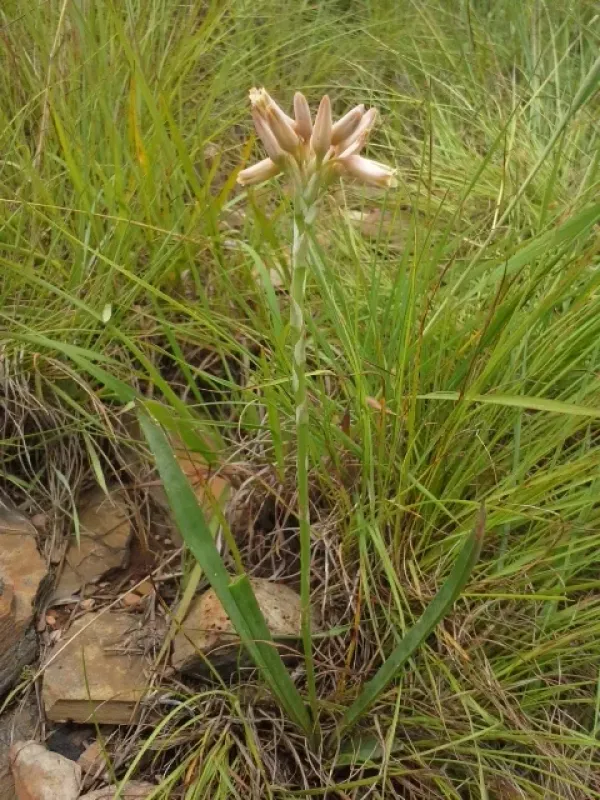
Botanically, it is characterized by its miniature size, forming a dense basal rosette of narrow, grass-like leaves. The foliage typically displays a deep green color, often speckled with small white spots, adding to its aesthetic value in collections of desert plants.
In terms of cultivation, Aloe minima requires bright, indirect light to maintain its compact growth habit. While it can handle some direct morning sun, intense midday light can scorch the delicate leaves if the plant has not been properly acclimatized.
The ideal growing medium is a well-draining succulent mix. It is recommended to amend standard potting soil with inorganic components like pumice, perlite, or grit to ensure that water flows through quickly and does not leave the roots sitting in moisture.
Watering should be approached with caution, allowing the substrate to dry out completely between sessions. During the winter dormancy, water should be restricted even further, maintaining the plant in a cool, dry environment to prevent etiolation and decay.
Main diseases and pests
The most significant threat to Aloe minima is improper hydration, specifically overwatering, which leads to root and crown rot. Since the plant stores water in its leaves, it is far more tolerant of drought than it is of saturated soil conditions.
Pests such as mealybugs are common adversaries. These insects hide in the crevices between leaves and extract sap, leaving behind a white, cottony residue. Regular monitoring and physical removal or treatment with horticultural soap are effective control methods.
Spider mites can also attack the plant, particularly in conditions with low humidity and high temperatures. They manifest as fine webbing and tiny yellow speckles on the leaf surface, which can lead to premature leaf drop if not treated promptly.
Fungal infections can occur when the plant is kept in humid, stagnant air without proper ventilation. These infections may appear as dark spots or soft, mushy lesions on the leaf tissue, requiring the removal of infected parts and the application of a fungicide.
To keep the plant healthy, it is essential to ensure that the environment mimics its natural habitat: airy, bright, and dry. Proper sanitation and checking new plants for pests before introducing them to a collection remain the best preventative measures.