
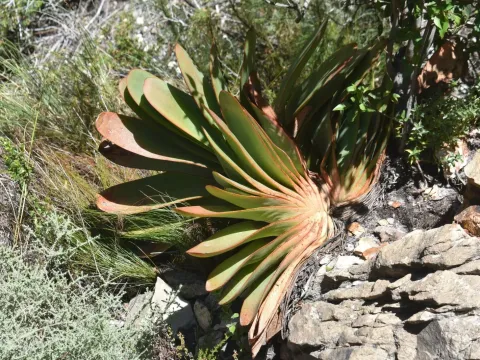
Aloe haemanthifolia
Aloe haemanthifolia
Aloe haemanthifolia is a distinct succulent species belonging to the Asphodelaceae family. It is an endemic plant native to the high-altitude mountain regions of the Western Cape in South Africa.
What the section contains
Aloe haemanthifolia
Botanically, it is easily recognized by its distichous, fan-shaped leaves that are flattened and leather-like, resembling the foliage of the Haemanthus genus. This growth pattern is a unique adaptation to its rocky, high-altitude environment.
This culture requires specific environmental conditions, including bright but indirect light and well-ventilated spaces, as it originates from areas with cool, misty weather patterns.
Soil requirements are strict: the medium must be highly porous, consisting of inorganic components like pumice, grit, and sand to prevent any moisture buildup near the base of the rosette.
Regarding agricultural techniques, irrigation should be carefully monitored to match the seasonal rhythm of the plant, ensuring the substrate dries out completely between waterings.
The primary threat to Aloe haemanthifolia is root rot, which occurs rapidly if the drainage is insufficient or if the plant is left in waterlogged conditions.
Pests such as mealybugs and spider mites are common problems, especially when the plant is grown in low-humidity environments with restricted air circulation.
Fungal pathogens can colonize the fleshy leaves if water remains trapped in the central rosette, causing localized necrosis and eventual collapse of the plant structure.
Preventive measures include maintaining strict hygiene, avoiding overhead watering, and using systemic fungicides if an infestation occurs in the growing space.
Proper ventilation is the best strategy for disease prevention, as it mimics the natural wind-swept environment of the Cape mountains where this rare species thrives.