
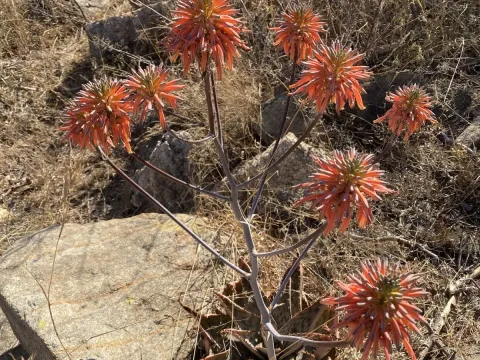
Aloe greatheadii
Aloe greatheadii
Aloe greatheadii belongs to the Asphodelaceae family and is a succulent perennial native to the summer rainfall regions of southern and central Africa. It is highly valued for its striking spotted foliage.
What the section contains
Aloe greatheadii
The plant requires full sun to partial shade to thrive. In a controlled agricultural environment, light intensity management is crucial to maintain the plant's distinctive leaf pigmentation and compact growth habit.
Regarding soil requirements, Aloe greatheadii demands extremely well-draining substrates. A mixture of loam, coarse sand, and grit is ideal to prevent moisture accumulation around the roots.
The climate requirements include warm conditions, ideally ranging between 20°C and 28°C. During the dormant winter season, temperatures should not drop below 5°C to avoid tissue damage.
Agricultural management involves deep but infrequent watering. It is essential to let the growing medium dry out completely between irrigation cycles to mimic the natural arid habitat of the species.
The most common threat to Aloe greatheadii is fungal root rot, primarily triggered by over-watering or the use of substrates with insufficient porosity and drainage properties.
Pest infestations frequently include mealybugs, which hide in the tight leaf rosettes. These pests are difficult to eradicate manually and often require systemic insecticide treatment.
Leaf spot diseases caused by various fungi can occur if humidity levels are too high. Improving ventilation and reducing overhead watering significantly lowers the risk of infection.
Aphids may occasionally attack the flowering stalks, necessitating careful monitoring during the reproductive phase of the plant to protect the seed set.
Integrated pest management protocols should focus on preventive measures, such as maintaining cleanliness and proper plant spacing to ensure airflow and reduce the build-up of humidity.