
Aloe globuligemma
Aloe globuligemma
Description
Growing requirements
Aloe globuligemma belongs to the Asphodelaceae family. It is native to southern Africa, specifically found in Botswana and northern parts of South Africa, where it thrives in rocky terrain and open woodland environments.
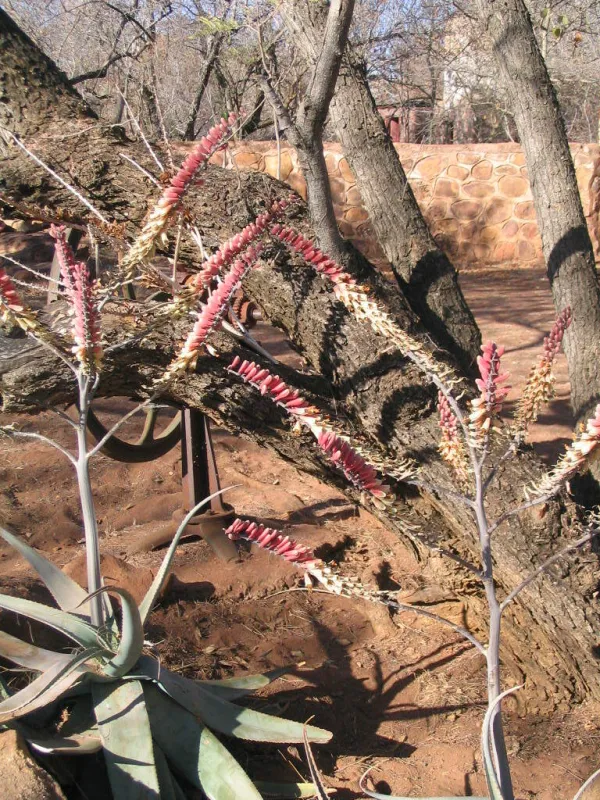
The plant grows as a large succulent, featuring dense rosettes of grayish-green leaves with armed margins. Its defining botanical feature is its striking inflorescence, which produces globose flower buds, distinguishing it from other Aloe species.
To cultivate this plant successfully, one must provide soil that mimics its natural habitat, emphasizing excellent drainage. A gritty, sand-based substrate is essential to prevent moisture retention, which is fatal to its roots.
The species requires high levels of solar radiation and warm temperatures to maintain its structural integrity. It is not frost-tolerant and must be protected in environments where temperatures drop near or below freezing.
Agrotechnical management focuses on minimal irrigation cycles, especially during the dormant winter phase. Proper spacing and airflow are crucial to prevent the accumulation of humidity within the foliage rosettes.
Main diseases and pests
Root rot is the most common threat to Aloe globuligemma, usually induced by poor drainage or overwatering. Maintaining a strict dry-down cycle between watering events is the most effective preventative measure.
Mealybugs are a frequent pest that targets the leaf axils, where they feed on sap and secrete honeydew. These should be treated with systemic insecticides or topical applications of rubbing alcohol on infested areas.
Scale insects can also infest the leaves, forming small, hard bumps that weaken the plant over time. Regular monitoring of the plant’s foliage is necessary to detect these infestations before they spread across the entire collection.
Fungal spot diseases can occur if the humidity levels remain consistently high with stagnant air. Improving ventilation is key to stopping the spread of fungal spores and maintaining healthy leaf tissue.
When managing pests or diseases, it is advised to isolate the infected plant immediately to prevent cross-contamination. Utilizing well-draining pots and professional-grade succulent soil mixes helps minimize the risk of recurring issues.