
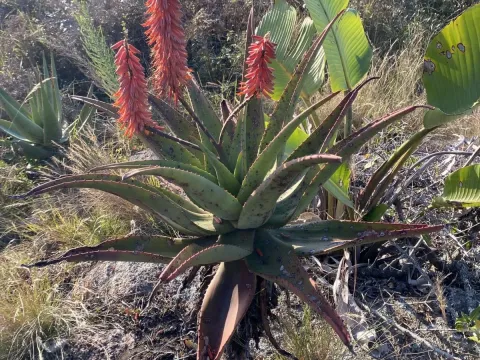
Candelabra Aloe
Aloe candelabrum
Candelabra Aloe (Aloe candelabrum) is a striking succulent plant belonging to the Asphodelaceae family. Native to the KwaZulu-Natal province of South Africa, this species thrives in rocky habitats and exposed slopes, where it is well-adapted to high sunlight and varying moisture levels.
What the section contains
Candelabra Aloe
Botanically, it is known for its tall, arborescent growth habit, often reaching several meters in height. The succulent leaves are arranged in dense rosettes, featuring serrated margins and a characteristic glaucous blue-green color that serves as a protective mechanism against intense UV exposure.
Cultivation of this plant requires full sun exposure to maintain its structural integrity and health. In container gardening, a fast-draining, gritty potting mix is essential. The medium should be composed of mineral components to prevent any risk of moisture retention that could harm the roots.
Temperature management is critical for the survival of this species. As it is native to subtropical regions, it cannot withstand frost. In cooler climates, it must be grown in greenhouses or protected indoor environments, maintaining a temperature above 10 degrees Celsius throughout the year.
Watering practices should be strictly controlled, focusing on a thorough soaking followed by a complete drying of the soil. During the winter months, the plant enters a semi-dormant state, requiring very little or no water to maintain healthy growth cycles without triggering rot.
Fungal pathogens and root rot represent the primary threats to the health of the Candelabra Aloe. These issues are almost exclusively caused by overwatering or poor drainage conditions, leading to the rapid decay of the plant's succulent tissues.
Mealybugs and scale insects are the most frequent pests encountered in collections. These sap-sucking insects often congregate at the base of the leaves, making them difficult to eradicate once they have established a significant colony within the central rosette.
Spider mites may also pose a problem, especially in environments with low humidity and high temperatures. They manifest as fine webbing and stippling on the leaves, which can severely reduce the aesthetic and physiological quality of the plant.
Treatment involves the use of systemic insecticides, though care must be taken to ensure the chemicals are safe for succulents. Mechanical removal of pests using alcohol-dipped swabs is often effective for smaller infestations detected early.
Preventative care is the best strategy, emphasizing proper air circulation and the avoidance of overcrowding. Keeping the plant in an environment with stable, dry conditions helps naturally minimize the risk of both pest outbreaks and fungal infections.