
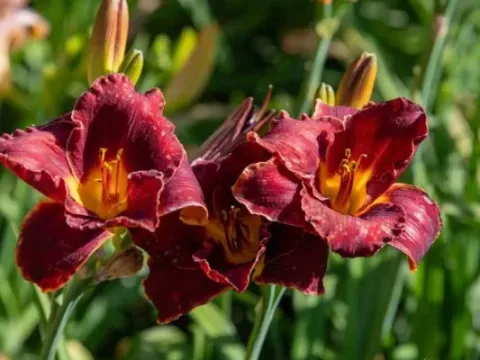
Daylily hybrids
Hemerocallis hybrids
Daylily hybrids (Hemerocallis hybrids) are members of the Asphodelaceae family and are highly valued for their resilience and aesthetic appeal. Propagation is primarily carried out through division of mature clumps in early spring or late autumn when the plants are dormant.
What the section contains
Daylily hybrids
When dividing, it is crucial to select healthy mother plants that are at least 4 to 5 years old. The root system should be divided carefully to ensure each segment contains enough roots and multiple healthy growth points.
Planting depth is a critical factor for success; the crown of the plant should be buried no deeper than 2-3 centimeters below the soil surface. Excessive planting depth often results in slow growth and lack of flower production.
For optimal results, spacing should allow for airflow between plants, typically 40 to 60 centimeters apart. This spacing reduces the risk of fungal diseases by allowing the foliage to dry out quickly after rain.
Immediately after planting, a deep watering is necessary to settle the soil around the roots and minimize air pockets. This process is essential for establishing strong contact with the soil environment.
These hybrids thrive in full sun, requiring at least 6 to 8 hours of direct light daily to produce the best blooms. While some varieties tolerate partial shade, insufficient light often results in weak stems and sparse flowering.
The ideal soil is rich in organic matter, well-drained, and slightly acidic. Daylilies are highly adaptable to various soil types, but they perform best in fertile, loamy soils that can retain moisture without becoming waterlogged.
Water management is essential, especially during the bud development phase. Consistent moisture ensures the size and quality of the flowers, whereas drought conditions significantly shorten the flowering duration.
Fertilization with balanced NPK fertilizers is recommended at the start of the growth season. Avoid high nitrogen levels during late summer to prevent excessive foliage growth at the expense of root hardiness before winter.
Mulching is a beneficial practice, as it helps suppress weeds and maintains soil moisture levels. Organic mulches such as compost or bark are preferred for improving long-term soil structure.
The daylily gall midge is a significant pest that damages flower buds, causing them to deform and drop prematurely. Regular monitoring and removing infested buds are the primary methods for control.
Thrips can also damage flowers and leaves, creating unsightly streaking. Integrated pest management strategies, including the use of soaps and targeted insecticides, are effective in controlling their populations.
Leaf streak and rust are common fungal issues that thrive in warm, humid climates. Ensuring good garden hygiene, such as removing dead foliage in the fall, helps reduce the overwintering of pathogens.
Crown rot can occur if the soil is poorly drained or if the plant is buried too deep. In case of infection, the plant must be lifted, cleaned of all diseased parts, and replanted in fresh, well-draining soil.
Slugs and snails can be problematic in the spring, attacking tender new growth. Using protective barriers or organic baits around the plant bases is a standard practice to mitigate this risk.