
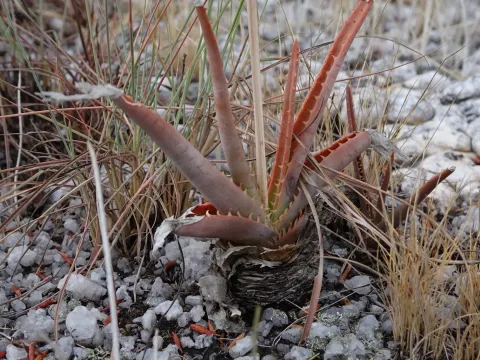
Compressed Aloe
Aloe compressa
Aloe compressa is a distinctive succulent species belonging to the Asphodelaceae family. This plant is endemic to Madagascar, where it occupies highly specialized niches on rocky, mountainous slopes, showing remarkable resilience to harsh environments.
What the section contains
Compressed Aloe
Botanically, the plant is characterized by its compact, dense rosette of fleshy leaves. These leaves act as water storage organs, allowing the plant to thrive in arid conditions where rainfall is infrequent and erratic throughout the year.
Cultivation requirements demand full sun exposure for most of the day. In indoor environments, this species requires a southern exposure or supplemental high-intensity LED lighting to maintain its compact growth form and prevent etiolation.
The soil must be highly porous and inorganic. A professional succulent mix comprising pumice, coarse sand, and a small amount of grit is recommended to ensure rapid drainage and prevent the roots from remaining in contact with stagnant moisture.
Agrotechnical management focuses on the 'soak and dry' irrigation method. During the active growing season, water thoroughly and let the medium dry out completely. During the winter dormancy period, watering should be drastically reduced to mimic the natural dry season.
Root rot is the most significant threat to Aloe compressa, usually triggered by poor drainage or excessive watering during cooler periods. Once internal decay begins, it is often difficult to save the plant, making preventative drainage essential.
Mealybugs are common pests that target the tight crevices between the leaves. Because the rosettes are so dense, these pests can remain hidden for long periods, requiring systemic insecticides or targeted topical treatments to fully eradicate.
Spider mites can occur if the humidity levels are consistently too low and air circulation is stagnant. These microscopic pests cause chlorosis on the leaves, which significantly impacts the plant's ability to store energy for the dormant season.
Scale insects present a challenge by attaching themselves firmly to the waxy surface of the leaves. Their hard shells protect them from many contact pesticides, necessitating the use of systemic treatments or careful manual removal with alcohol-soaked tools.
Fungal infections can emerge on damaged tissue if the plant is handled roughly or if the leaves remain wet for too long. Maintaining a dry, well-ventilated environment is the primary defense strategy against all major pests and bacterial pathogens.