
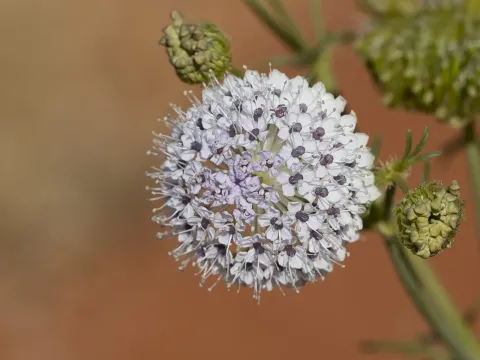
Trachymene glaucifolia
Trachymene glaucifolia
Trachymene glaucifolia is typically cultivated as an annual crop. Sowing should take place in early spring after the risk of frost has passed, ensuring the soil temperature is sufficient for consistent germination.
What the section contains
Trachymene glaucifolia
Given the small size of the seeds, they should be sown on the surface of the growing medium or covered with a very thin layer of soil. Light exposure is beneficial for the germination process of this species.
When sowing in trays, it is essential to use a highly permeable substrate to prevent seedling damping-off. Proper spacing during sowing is crucial to allow for sufficient air circulation as the plants develop.
Field sowing requires a finely prepared seedbed to ensure good contact between the seed and the soil particles. Maintaining surface moisture during the first few weeks is vital until the primary root system is established.
For commercial production, staggered sowing intervals can be employed to extend the harvest window and maximize the availability of flowers throughout the growing season.
Belonging to the Apiaceae family, this plant is native to arid and semi-arid regions of Australia. It requires full sun exposure to thrive and produce high-quality flowering stems.
The ideal soil profile is sandy or loamy with excellent drainage. This species does not tolerate heavy, waterlogged clay soils, which can quickly lead to root rot and plant failure.
While the plant is drought-tolerant once mature, it requires moderate irrigation during the active vegetative growth phase. Excessive moisture, particularly during the flowering stage, should be avoided to preserve stem quality.
Soil nutrient levels should be managed carefully; high nitrogen content can lead to excessive vegetative growth, which often results in weak stems and delayed or sparse flowering.
Temperature management is important, as extreme heat can trigger early senescence. The plant performs best in moderate climates where nocturnal temperatures provide a cooling effect on the root zone.
The primary threats to Trachymene glaucifolia in agricultural settings are soil-borne fungal pathogens, such as Pythium and Fusarium species, especially in poorly drained conditions.
Aphids and mites are the most common insect pests, particularly during the early bloom phase. Monitoring programs should be implemented to detect infestations before they reach the threshold requiring chemical intervention.
Powdery mildew can become a significant issue if humidity levels are high and air movement within the crop canopy is restricted. Preventive pruning and proper spacing help mitigate this risk.
Nematodes can cause significant damage to the taproot, reducing the overall vigor of the crop. Crop rotation with non-host species is highly recommended to break the life cycle of these soil pests.
Effective weed management is essential during the early stages of establishment, as this plant does not compete well with vigorous weeds for nutrients or light.