
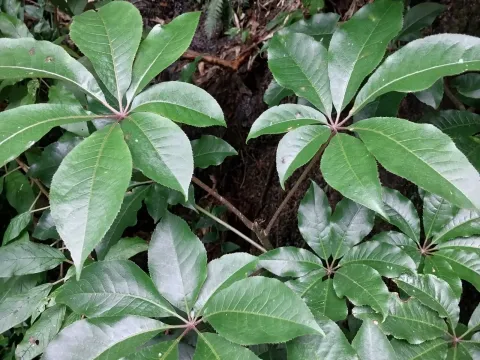
Schefflera
Schefflera J. R. Forst. & G. Forst.
Schefflera (Schefflera) is a genus of evergreen trees, shrubs, and lianas belonging to the Araliaceae family. Native to tropical regions of Asia, Australia, and the Pacific Islands, these plants thrive in humid forest environments and have become popular globally for their ornamental value.
What the section contains
 Dwarf umbrella tree
Schefflera arboricola (Hayata) Hayata ex Merr.
Dwarf umbrella tree
Schefflera arboricola (Hayata) Hayata ex Merr.
 Schefflera actinophylla
 (Endl.) Harms
Schefflera actinophylla
Schefflera actinophylla (Endl.) Harms
 Schefflera elegantissima
 (hort. Veitch ex Mast.) Lowry & Frodin
Schefflera elegantissima
Schefflera elegantissima (hort. Veitch ex Mast.) Lowry & Frodin
 Schefflera heptaphylla
 (L.) Frodin
Schefflera heptaphylla
Schefflera heptaphylla (L.) Frodin
 Schefflera schizophylla
 (Hance) Frodin
Schefflera schizophylla
Schefflera schizophylla (Hance) Frodin
 Schefflera taiwaniana
 (Nakai) Kaneh.
Schefflera taiwaniana
Schefflera taiwaniana (Nakai) Kaneh.
Schefflera
The botanical highlight of Schefflera is its distinctive palmately compound leaves, which often resemble an open umbrella. These plants can grow significantly in their natural habitat, but in cultivation, they are primarily valued for their foliage, which ranges from deep green to variegated patterns.
Regarding light requirements, Schefflera prefers bright, indirect sunlight. Direct sun can cause leaf scorch, while too little light will lead to thin, elongated stems and loss of foliage variegation. Maintaining a consistent temperature between 18°C and 25°C is critical for robust growth.
The soil should be nutrient-rich, well-draining, and slightly acidic to neutral in pH. A mix of peat, bark, and perlite provides the necessary aeration and moisture retention that the root system needs to prevent the common issue of root rot.
Agrotechnical care includes consistent watering, allowing the top layer of soil to dry out between applications. Humidity is just as important as soil moisture; using a spray bottle or placing the pot on a tray with pebbles and water helps simulate the plant's native tropical conditions.
Common pests that may affect indoor Schefflera plants include spider mites, mealybugs, and scale insects. These pests often thrive in low-humidity conditions, which makes regular inspection of the leaf underside essential for early intervention and effective control.
Fungal diseases are frequently associated with improper watering habits. If the soil remains waterlogged, the roots will begin to decay, leading to yellowing leaves and eventual plant loss. Ensuring the plant is kept in a well-ventilated area with adequate drainage is the best preventative strategy.