
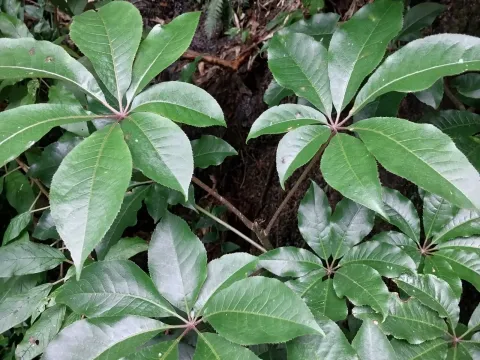
Schefflera
Schefflera
Schefflera, belonging to the Araliaceae family, is a diverse genus of tropical trees, shrubs, and vines. Originating from the rainforests of East Asia, Australia, and the Pacific Islands, these plants have become highly valued in the horticulture industry.
What the section contains
 Amber Schefflera
Schefflera succinea
Amber Schefflera
Schefflera succinea
 Narrow-leaf schefflera
Schefflera angustissima
Schefflera barteri
Schefflera barteri
Schefflera calva
Schefflera calva
Schefflera coenosa
Schefflera coenosa
Narrow-leaf schefflera
Schefflera angustissima
Schefflera barteri
Schefflera barteri
Schefflera calva
Schefflera calva
Schefflera coenosa
Schefflera coenosa
 Schefflera decaphylla
Schefflera decaphylla
Schefflera decaphylla
 Schefflera digitata
Schefflera diplodactyla
Schefflera diplodactyla
Schefflera hullettii
Schefflera hullettii
Schefflera digitata
Schefflera digitata
Schefflera diplodactyla
Schefflera diplodactyla
Schefflera hullettii
Schefflera hullettii
 Schefflera hybrid
s
Schefflera hybrid
Schefflera hybrids
 Schefflera impressa
Schefflera impressa
Schefflera impressa
 Schefflera morototoni
Schefflera morototoni
Schefflera morototoni
 Schefflera pueckleri
Schefflera racemosa
Schefflera racemosa
Schefflera pueckleri
Schefflera pueckleri
Schefflera racemosa
Schefflera racemosa
 Schefflera venulosa
Schefflera venulosa
Schefflera venulosa
Schefflera
The plant thrives in bright, indirect light. While it can adapt to lower light levels, excessive shade often results in stunted growth and the loss of leaf variegation in specific cultivars, reducing their aesthetic appeal.
Optimal soil conditions require a well-draining potting medium. A mix of peat-based soil and perlite is recommended to maintain moisture without causing waterlogging, which is essential for healthy root development.
Temperature requirements are consistent with tropical environments, ideally staying between 18°C and 25°C. Exposure to temperatures below 15°C or direct cold drafts will typically result in significant leaf drop.
Regular fertilization is required during the active growing season. A balanced liquid fertilizer applied every few weeks supports the vigorous development of its characteristic palmate leaves and maintains plant health.
Common pests include spider mites, mealybugs, and scale insects. These pests thrive in dry conditions and can quickly colonize the plant, leading to yellowing leaves and reduced structural integrity if left unchecked.
Fungal issues, such as root rot, are usually the result of overwatering. Ensuring proper drainage and allowing the surface of the soil to dry out significantly reduces the risk of pathogens infecting the root system.