
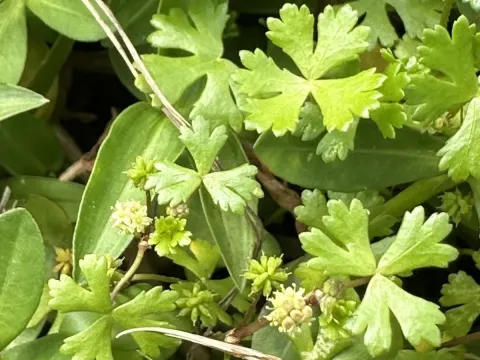
Taiwan pennywort
Hydrocotyle formosana
Taiwan pennywort (Hydrocotyle formosana) is a herbaceous perennial plant belonging to the Araliaceae family. Originating from subtropical regions, this plant typically thrives in habitats characterized by constant moisture and moderate to low light levels.
What the section contains
Taiwan pennywort
Successful agricultural production requires soils rich in organic matter, maintaining a pH level close to neutral. It is essential to ensure that the growing medium remains consistently moist without becoming waterlogged, as the root system is sensitive to prolonged hypoxia.
The climate requirements include a frost-free environment with temperatures ranging between 18 and 25 degrees Celsius. In industrial cultivation, maintaining high air humidity is as important as soil moisture to prevent leaf edge necrosis and ensure high quality of the raw biomass.
Agrotechnical management focuses on controlled irrigation systems and potential shading solutions. Due to its sprawling growth habit, regular thinning or controlled propagation may be required to prevent overcrowding and maintain the vitality of the crop throughout the season.
The plant is increasingly recognized for its phytochemical properties, which makes it a valuable asset for the herbal extract industry. Its ability to form a dense canopy cover also aids in natural soil protection, preventing erosion in nursery conditions.
The most significant threats to Hydrocotyle formosana include fungal pathogens such as powdery mildew and damping-off disease, which proliferate rapidly in high-humidity conditions. Ensuring proper spacing between plants is the primary preventive measure against these diseases.
Insect pests and mollusks represent a constant challenge for this crop. Specifically, gastropods such as slugs can severely damage the foliage, necessitating regular field monitoring and the application of integrated pest management strategies to protect the crop yield.