
Whorled pennywort
Hydrocotyle verticillata
Description
Growing requirements
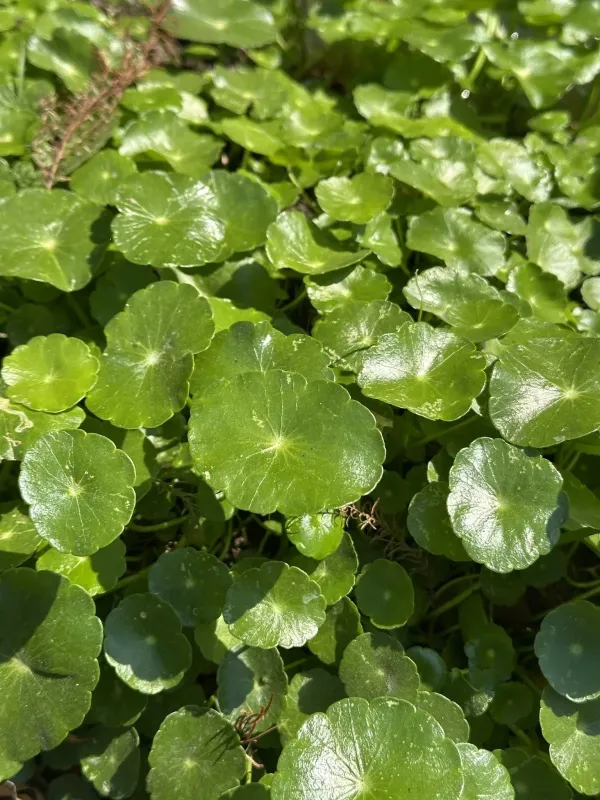
Whorled pennywort (Hydrocotyle verticillata) is a perennial herbaceous plant belonging to the Araliaceae family. Native to the Americas, this species is commonly found in wetlands, swamps, and shallow water margins, where it thrives in moist, organic-rich soil conditions.
The plant is easily recognized by its unique peltate leaves, which are circular and attached to the center of the stalk, resembling tiny umbrellas. The leaves grow from creeping rhizomes, forming a dense ground cover or carpet in suitable environments.
To ensure healthy growth, the culture requires bright, indirect light. Insufficient lighting levels will cause the plant to become leggy, as the stems stretch searching for photons, significantly reducing the aesthetic quality of the foliage.
Regarding soil and water, Hydrocotyle verticillata prefers a slightly acidic to neutral pH environment. It is highly adaptable and can be grown submerged in aquariums, semi-submerged in paludariums, or as a bog plant in damp soil.
Propagation is primarily achieved through the division of the rhizomes. Because it spreads rapidly via runners, it is an excellent choice for ground cover in decorative water features, provided there is enough space and nutrient availability to support its growth.
Main diseases and pests
Common plant health issues include root rot and fungal infections, which are often caused by poor water circulation or the accumulation of decaying organic matter in the substrate. Maintaining cleanliness is crucial for preventing these problems.
When grown in emersed conditions, the plant is susceptible to pests such as aphids and spider mites. These insects feed on the sap, causing leaf deformation and overall weakness, requiring manual removal or biological pest control.
Chlorosis is a frequent sign of nutrient deficiency, specifically a lack of iron or magnesium. If the leaves start turning pale or yellow, it is time to adjust the fertilization routine to include the necessary micronutrients.
Temperature fluctuations can also negatively impact the plant. Keeping the temperature stable between 20-25°C is ideal, as extreme cold or heat can cause the plant to go dormant or succumb to stress-induced wilting.
Overcrowding is another silent threat to the vitality of the plant. If the colony becomes too dense, the lack of air circulation and light penetration to the base of the plant can lead to leaf decay and the death of older portions of the rhizome.