
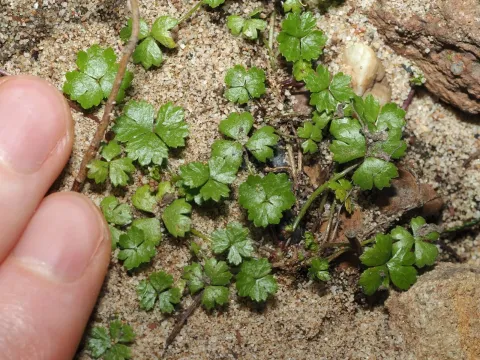
Hydrocotyle tripartita
Hydrocotyle tripartita
Hydrocotyle tripartita is not typically propagated by seeds in a commercial agricultural setting; instead, it relies on vegetative propagation to maintain its specific aesthetic and growth characteristics.
What the section contains
Hydrocotyle tripartita
The most effective method for starting new clusters involves taking small stem cuttings that include healthy nodes and internodes, which facilitate rapid root development in favorable conditions.
Optimal planting time is during the active growth phase, characterized by stable warm temperatures and consistent high-intensity lighting, which are essential for establishment.
When preparing the substrate, ensure it is clean, nutrient-rich, and well-draining to prevent early decay of the freshly planted cuttings.
For uniform carpet formation, cuttings should be spaced evenly, typically at intervals of 3 to 5 centimeters, depending on the desired density and speed of surface coverage.
As a member of the Araliaceae family, this plant is remarkably versatile, capable of thriving in both fully submerged aquatic environments and moist terrestrial conditions.
High light intensity is a primary requirement for the plant to maintain its characteristic compact, clover-like foliage and to prevent the stems from becoming thin and leggy.
The ideal growing substrate should be loose, rich in organic matter, and maintain a pH balance between slightly acidic to neutral to support optimal nutrient uptake.
Temperature control is vital, with the plant performing best in a range between 20 and 28 degrees Celsius; extreme deviations can significantly slow its metabolic rate.
Regular fertilization and CO2 supplementation are often required in intensive cultivation setups to maximize biomass production and ensure vibrant leaf color.
The yield of this crop is measured by the volume and density of biomass produced over a specific period, reflecting the plant's rapid growth potential under optimal conditions.
In well-managed systems with professional-grade lighting and nutrient supply, the plant can spread quite aggressively, providing frequent harvests of healthy trimmings.
Productivity is highly correlated with the quality of care; regular pruning of mature sections encourages the development of fresh, young growth, maintaining high production standards.
Hydroponic systems offer the highest yields by providing a precise nutrient environment, effectively eliminating the competition often found in terrestrial soil beds.
By optimizing the photoperiod to 10-12 hours of high-quality light, growers can significantly increase the total seasonal output of usable planting material.
The primary threats to crop health include the development of pathogens due to stagnant water conditions or poor circulation, which can lead to stem rot.
Excessive nutrient levels in the water column can trigger competitive algae growth, which may shade the Hydrocotyle and restrict its access to vital light energy.
Pests, such as various species of snails or sap-sucking insects, may cause physical damage to the leaves, creating entry points for fungal or bacterial infections.
- Iron deficiency, evidenced by yellowing (chlorosis) of the leaves.
- Root rot caused by poor oxygenation in the substrate.
- Stretching of the stems due to insufficient light exposure.
To mitigate these risks, maintaining strict sanitation protocols and ensuring consistent water movement through the crop canopy is essential for long-term health.
Harvesting involves the careful trimming of established stems using sterile, sharp equipment to prevent tissue damage and subsequent rot at the cut site.
The collected cuttings must be processed immediately, with damaged leaves or stems removed to ensure the final product meets commercial quality standards.
Post-harvest, the plant material should be kept in high-humidity conditions or submerged in clean water to prevent dehydration during the sorting and packaging process.
Efficiency in harvesting is achieved by timing the cuts to coincide with the plant's peak growth cycles, ensuring the highest vigor of the vegetative material.
Proper scheduling of harvests allows for a continuous supply of material, supporting year-round production for landscaping and aquascaping markets.